Old Bus Photos

Sheffield Corporation – Leyland Titan PD3 – 4462 WE – 462
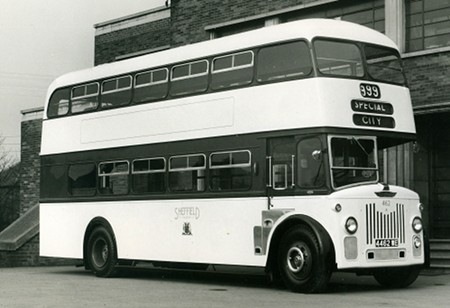
Sheffield Corporation - Leyland Titan PD3 - 4462 WE - 462
Copyright ‘unknown’ if you know please get in touch

Sheffield Corporation
1959
Leyland PD3/1
Roe H39/30R

This was one of the first 30ft long double deckers for Sheffield and was one of a batch of 30 similar buses. In a typically perverse way these buses, all for the A fleet, were numbered 461-476 and 901-914. Logic suggests they should have been 901-930 but gap filling seemed to be a Sheffield speciality. Following the closure of Northern Coachbuilders and the body building facility at Leyland Motors in the early 1950s, Sheffield dual sourced bodywork for their new double deck deliveries from Weymann and Roe until Alexander and Park Royal came into favour. The Roe body in this 30ft rear entrance form and with the elegant Sheffield livery was a design classic. I wonder if anyone can explain why Roe bodies for Sheffield were painted in this style whilst those from other bodybuilders had the more conventional three blue bands. 462 was new in March 1959 and is seen outside the Roe factory premises prior to delivery. Similar vehicle 904 is preserved.

Photograph and Copy contributed by Ian Wild

A full list of Titan codes can be seen here.


30/03/11 – 10:00

Before becoming the 42/53 route with Atlanteans, the 38 was primarily and AEC route. For a short while, in the mid sixties, the 901 – 914 suddenly replaced AECs overnight. [It was years before I realised that there were proportionally more Leylands in the fleet.] There must have been a reason, but I never discovered what it was.
I was, and remain, an AEC man and was most displeased. Old age and experience have placed Leyland as a much loved second – but these vehicles had the mitigating feature of those beautiful Roe bodies. The 38 was East Bank, the 461 – 476 were from another garage and I rarely came upon them except "in town". …..and I don’t know why Roe, and certain Leyland bodies, had their own special livery either.

David Oldfield


30/03/11 – 14:38

What a great photograph Ian and what a lot of memories it evokes from when we both lived in Sheffield and travelled up Greystones Road on the "74" between our respective homes. I guess the 74 was an unusual route for Sheffield in that it didn’t cross the city but meandered around the southern suburbs. Like you in one of your earlier comments I remember the winters in Sheffield with snow on the ground but the buses kept running, always got us to school. How things change!

Stan Zapiec


31/03/11 – 16:00

I agree wholeheartedly with Ian and David that the proportions and original livery of the PD3/Roe produced one of the finest looking buses to grace the Sheffield fleet. On the question of livery style, Keith Beeden has stated that in the case of the original batch of PD2/Roe 386-394, the Roe design did not offer an easy adoption of the STD cream and azure blue with three bands and that it was agreed that the livery should be of the ‘simplified style’ quite similar to the Farington scheme as seen on the all Leyland PD2s of 1949. This resulted from the difficulty at the time of accommodating the standard Sheffield destination display which of course with early Roe deliveries was of a side by side style. Presumably, this livery was considered appropriate for all future Roe deliveries despite the standard display being accommodated in due course with effect from the Regent 3’s of the 168 series. We know of course that subsequently, many Roes were repainted in ‘standard’ livery but to my mind, it was nowhere near as elegant. My personal opinion is that in painting the ‘bars’ black between the destination display in the early 60’s, disfigured the look of Sheffield buses in one fell swoop although I believe the general manager of the day also reinstated the cream roof for which credit is due. I cite the present livery scheme of preserved 904 as an example of ‘disfigurement’ but as I said, it is purely my opinion and others will no doubt like it.
Whilst we are on the subject, does anyone remember that AEC/Regent No. 8, FWJ 808, also wore a version of the Farington livery in the late 40s or early 50s.

John Darwent


01/04/11 – 07:28

Sheffield 904 as preserved carries the later cream with bands livery and looks superb. A slightly earlier Roe bodied Titan PD2 II56 is also preserved and wears the blue window livery. This is a high backed seat bus used on C fleet long distance services.
As well as 904 in the final livery with cream bands Leyland Titan PD2-Roe 1156 3156WE of 1058 is also preserved and carries the livery with blue window surrounds on both decks.

Chris Hough


01/05/11 – 07:48

In reply to John and Ian, I can add further information to the Roe style of livery applied to Sheffield double deck buses.
The query about AEC Regent No.8 actually is the start of the case in question. Leyland Motors Ltd. delivered a large fleet of PD2/1 chassis with the new Farington body design. The former lower waistrail feature was eliminated, as was other external beading. Leyland advised Sheffield T.D. to the effect that it would be difficult to apply the usual cream livery with three blue bands. Possibly a suggestion that extra cost would ensue if the standard livery was still required, led to Sheffield looking to simplify the painting style.
Regent FWJ 808 was chosen to explore the possibilities and was out shopped in a bland style of all over cream with blue window surrounds. This eliminated the blue bands but the overall image was poor. A slight improvement, that included a little more blue, led to the adoption of the new style for all the Farington PD2’s. A similar situation arose with the Roe bodies, where the patented waistrail did not adapt to the three blue bands style and also lack of upper beading. Therefore, it was deemed expedient to apply a similar livery to the Farington style.
I hope that this will clarify matters.

Keith Beeden


23/03/13 – 07:56

I believe the reasoning behind the different paint schemes in use on Sheffield buses was purely financial. Some bodies had beading in different places to others and thus the joint between different colours were easier to apply on some rather than others. The placing of masking would add extra cost which on a big batch of vehicles could amount to quite an amount of money which some authorities would be averse to spending on buses!! The characteristic Roe waistline bulge is one awkward bodybuilders addition in question.

Brian Lamb


Quick links to the  -  Comments Page  -  Contact Page  -  Home Page
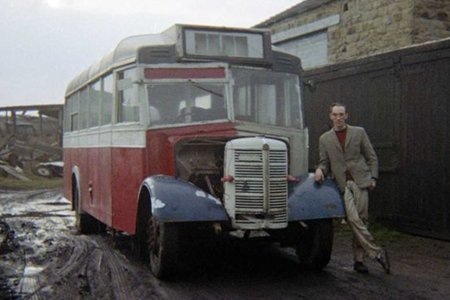


Portsmouth Corporation – Bedford OWB – CTP 200 – 170

Portsmouth Corporation - Bedford OWB - CTP 200 - 170
Copyright Chris Youhill

Portsmouth Corporation
1944
Bedford OWB
Duple B32F

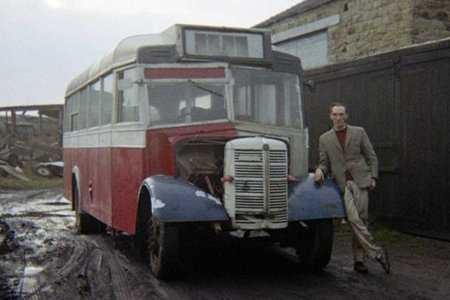
Perhaps this old snap may be of interest as we have had a previous posting of a sister vehicle whist in service with the above fine municipal operator. It was taken at Robin Hood on the A61 between Wakefield and Leeds in early 1968. At that time I was involved with a group who were initially preserving the vehicle and I did quite a bit of work on it many weekends, one difficult job in particular was to rebuild the rotting destination box assembly which can be clearly seen here. Sadly, due to domestic difficulties, I had to part company with the Group before the vehicle eventually took to the road in fine order and so I never actually rode on it and it was sold on shortly after that.

Photograph and Copy contributed by Chris Youhill


28/03/11 – 10:30

I recall you saying, Chris, that you’d put some hours in on this vehicle, and I also recalled I’d seen a photo of the finished article on the web somewhere. It’s here with the following caption:
“1944 Bedford OWB 170 (CTP 200), pictured in wartime grey livery. Sold in 1963, the remains of the original body were replaced in the early 1990s with a replica body partly built by Ulsterbus, who were restoring a similar vehicle. Photographed in Upper Drayton, Portsmouth April 1996. (Photo and text Malcolm Audsley)”
At least your efforts were to some avail in the end!
I was comparing my Mulliner-bodied example with your Duple example (and a few others). Superficially, both makes look the same, but the vents either side of the destination box are different, Mulliner having a cover over the apertures.
Thanks for posting it.
PS Is it you leaning nonchalantly on the front wing – what confidence that it would not collapse from rust corrosion!

Chris Hebbron


29/03/11 – 07:31

Yes Chris it is me leaning on the wing – my co- preservationist took the picture on my camera. You are right – it was indeed a risky pose to adopt, but I only weighed about "nine stone wet through" in those misguided heavy smoking days and so that no doubt saved me from an undignified descent into the mud !! We are amazed to hear of the subsequent rebuilding of the body and thanks very much for that additional information.

Chris Youhill


03/04/11 – 08:56

The bus itself, the mud, the dereliction in the background and the look of grim determination on Chris’s face all nicely sum up the early days of preservation, when finding covered accommodation was a nightmare and the transport "professionals" saw us as mad but harmless. Delighted that this project met with such success.

Ian Thompson


02/05/11 – 06:34

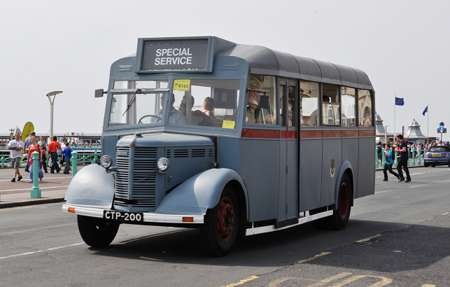
CTP 200 made the HCVS London to Brighton Run today Sunday 1st of May.
It is only the 2nd time out on a real run since we got it back on the road after a 10 year period of rest.
Apart from identifying a few little jobs to do she performed excellently.

Mike Elkin


02/05/11 – 12:53

Congratulations to Mike and friends on this achievement – my only surviving colleague from the original preservation group will be delighted to hear it. I’ve always been an ardent OWB/OB admirer, both in preservation and in full time public service, and the delightful lusty tones provided by these incredibly gutsy and totally honest little vehicles is music to the ear and comes into my mind very frequently.

Chris Youhill


02/05/11 – 12:56

Nice to hear from you Mike E and hear that she is in safe hands and putting in the occasional ‘public appearance’.
Perhaps you could fill in some of the gaps between Chris Y having to give up and near final completions, especially with regard to the Ulster part – how did this happen?

Chris Hebbron


04/05/11 – 06:56

Aside from the engine sounds, I always loved the sounds from Bedford gearboxes of that era – pure music!

Chris Hebbron


27/01/13 – 09:50

CTP 200_2

As I do from time to time I just randomly pick a page – often it helps me to at least try and understand what people are talking about. The posting of Portsmouth Corporation 170 registration CTP 200 has a mention of it attending the London to Brighton run in 2011. Above is picture taken by me as the vehicle passes Brighton pier.

Ken Jones


27/01/13 – 12:25

At the moment, she’s having some attention done to the engine and some repainting in the engine bay at the same time. Paintwork has been touched up, with some thought being given to something more extensive.

Chris Hebbron


30/05/13 – 06:00

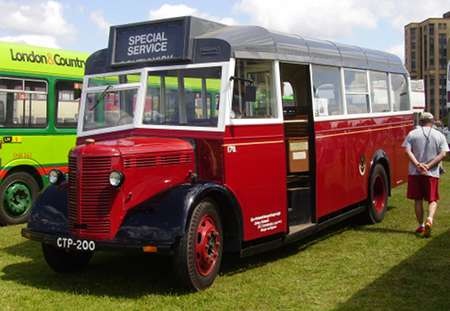
CTP 200 is to shortly have some remedial work done to the front grille, front wings and bumper. A new rear registration plate is to be made up, the offside half-drop window replaced and the opening windscreen reinstated. Then she will be going away to be painted in the Portsmouth red and white livery, with grey roof.

Clive Wilkin


30/05/13 – 11:34

She’s also had to have the engine professionally rebuilt recently, essentially because of a badly scored cylinder bore. The engine bay has, concurrently, had a thorough clean and repaint and the body some touchups.
She should be really smart when repainted in maroon, white and grey roof, just as most folk would recall here in service.

Incidentally, nice seafront photo of her, Ken J.

Chris Hebbron


16/06/15 – 08:22

CTP 200

CTP 200_inner

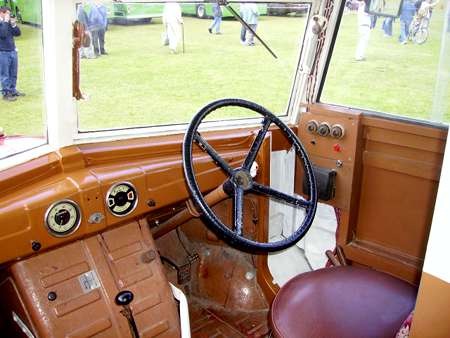
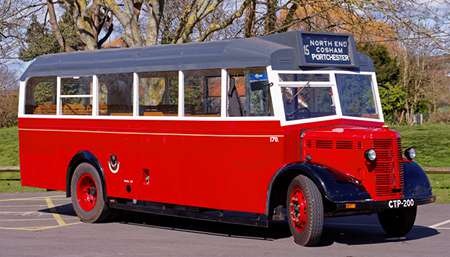
As indicated earlier this restored little bus is now back in it’s true colours of Portsmouth red and white, with a grey roof. It appeared at the Southdown 100 centenary event at Southsea Common on June 7th. It looked very smart, and drew many admiring looks from both enthusiasts and general public. It’s good to compare this with the original picture on this posting, when it’s restoration was at an early stage. Many man-hours (ladies too?) have passed since then to bring it to it’s smart looks today. Well done to everyone.

Michael Hampton


16/08/15 – 08:47

CTP 200_03
Copyright Kevin Warrington

CTP 200_04
Copyright Kevin Warrington

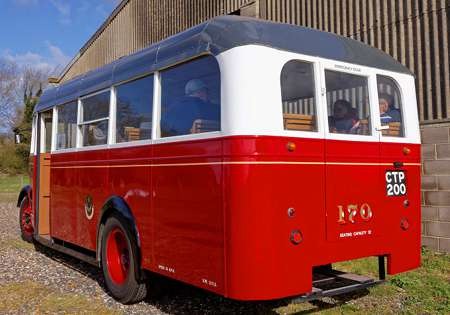
To complete an all-round view, here are an offside and rear view of CTP 200 (170), taken on its first outing after a recent renovation. The photos were taken by Kevin Warrington, an active participant in CPPTD, who preserve Portsmouth Corporation vehicles. He allowed these photos to be posted here."

Chris Hebbron


CTP 200 Vehicle reminder shot for this posting


26/10/15 – 06:53

CTP 200
Copyright Unknown

Voila! Another pre-restoration photo of CTP200 when first in the hands of CTTPD (City of Portsmouth Preserve Transport Depot): (renovation of the adjacent PD1 is well underway).

Chris Hebbron


27/10/15 – 06:41

Thank you Chris. I do remember seeing these two together somewhere near Waltham Chase in the early 1980’s, when taking my sons to band practice. There was never any opportunity to find out more. Now 170 is complete, and it’s good to know that the PD1 is also progressing.

Michael Hampton


28/10/15 – 06:58

What a tonic to see these two veterans side by side, and grand to know that the Bedford is already "better than new." I’m sure that the gorgeous PD1 will be equally appealing in its own class when completed, and this picture of them standing side by side "in recovery" is delightful.

Chris Youhill


Quick links to the  -  Comments Page  -  Contact Page  -  Home Page


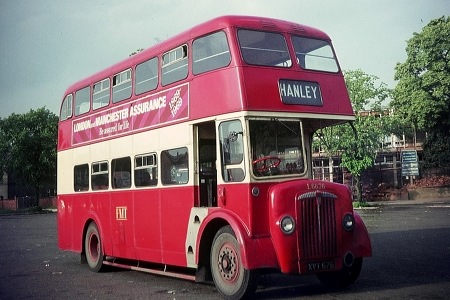
PMT – Daimler CVG6 – XVT 676 – L6676

PMT - Daimler CVG6 - XVT 676 - L6676
Copyright Ian Wild

Potteries Motor Traction
1956
Daimler CVG6
Northern Counties L31/28RD

The above vehicle is one of a 30 strong batch delivered in 1956 – half with Metro Cammell H61RD bodies, the other half as shown.
These were delivered with Gardner 5LW engines and Twyflex Centrifugal Clutches (rather than the more usual fluid flywheels). Both features I suspect were down to the BET Group’s parsimony in relation to fuel consumption. The 5LW was never a match for the hilly Potteries area in these buses. Over the years, more than half were fitted with 6LW engines and one, H6656, even acquired a fluid flywheel as well. They were colloquially known as ‘Jumpers’ referring to their tendency to lurch when pulling away on an uphill gradient, something more common with the 5LW versions. Only three of the lowbridge variety kept 5LWs to the bitter end, L6664, L6666 and L6673. The photo was taken at Sandbach in May 1969 and shows Burslem (locally pronounced "Boslum") Depots L6676 on a Market Day extra from Hanley. Sandbach market was a popular attraction in the area in those days.

Photograph and Copy contributed by Ian Wild

A full list of Daimler codes can be seen here.


28/03/11 – 10:30

Apparently the Twiflex centrifugal clutch is still in production. To have lasted at least 54 years it must now be a judder-free product, though I know these things often depend on the installation. Fluid flywheels are reckoned to be only 96-97.5% efficient even at high revs/low load (where the engine itself isn’t particularly efficient) so I guess that allowing also for time spent in gear at traffic lights, with the engine on "heavy" idle churning the fluid round, the fuel consumption would be about 8% greater than that achieved with a clutch, whether plain or centrifugal. Two question, therefore:
1) Has anyone any comparative consumption figures?
2) Have any Twiflex-equipped buses survived?

Ian Thompson


25/01/13 – 18:10

There can’t have been many 27ft long lowbridge double deckers built with a top deck capacity of 31. It must have been achieved by an additional 4 seater row – I travelled on these quite frequently on the 46 to Blurton Estates but I don’t recall any particular problem with passing other seated passengers when alighting.

Ian Wild


26/01/13 – 06:38

Here’s a photo of a Twiflex Centrifugal Clutch, looking much like the shoe part of a drum brake, certainly simpler than a fluid flywheel. See //tinyurl.com

Chris Hebbron


27/01/13 – 07:55

That’s pretty much as I recall the Twiflex clutch except that the modern version seems to be hydraulically actuated (pipe to each segment). My recollection is that the shoe assemblies were on metalastic mounts which dampened the centrifugal force as the assembly was accelerated. It’s a long time ago-I may not have this quite right. interesting to see the design is now of Ukranian manufacture! I don’t recall having to replace one of these clutches whereas the fluid flywheel glands in Atlantean, Fleetline and Roadliner were commonplace failures.

Ian Wild


27/01/13 – 12:17

And to what vehicles do you recall these clutches being fitted, Ian?

Chris Hebbron


28/01/13 – 17:35

Chris-all 30 of the PMT Daimler CVG5s of 1956 were delivered with Twiflex clutches in place of fluid flywheels. I’m sure I’ve read somewhere (maybe elsewhere on this site?) that Walsall Corporation also tried them in the mid 50s.

Ian Wild


22/07/14 – 06:48

Walsall Corporation took delivery of 15 Daimler CVG6 buses with twiflex system transmission in 1956 and they were nicknamed "jumping jacks". Here’s a newspaper report from 1974 referring to these buses: www.flickr.com/photos/walsall1955/

Walsall1955


09/12/15 – 06:09

At Stoke Depot we did meal break duties on these on the 46 Blurton run. These ‘Jumping Jacks’ were hated to a man.

David Knight


Quick links to the  -  Comments Page  -  Contact Page  -  Home Page


All rights to the design and layout of this website are reserved     

Old Bus Photos from Saturday 25th April 2009 to Thursday 4th January 2024