Old Bus Photos

Leeds City Transport – Leyland Titan PD2/1 – NNW 380 – 380
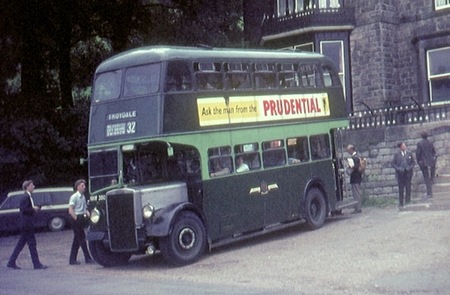
Leeds City Transport - Leyland Titan PD2/1 - NNW 380 - 380

Leeds City Transport
1950
Leyland Titan PD2/1
Leyland H30/26R

This Leeds City Transport bus is at the Rivelin Dams, Norfolk Arms terminus of Sheffield service 54 whilst on a tour of Sheffield routes on 19th June 1966 organised by The Leeds and District Transport News (still in production today as Metro Transport News). Sheffield 545 which appeared on this site some months ago accompanied the Leeds bus on the tour. The notes provided with the tour suggest that 380 was one of the last of its batch in service.

Photograph and Copy contributed by Ian Wild


24/07/11 – 10:53

A vehicle very dear to me – NNW 380 was to become number 13 in the Learner Fleet and was used to weigh up job applicants as it had, of course, a "live" gearbox and clutch. In October 1969 I applied for a job as a "direct driver" and reported to the Swinegate Headquarters at 5.00pm one weekday rush hour. The strict but kindly chap in charge of the Driving School, Senior Inspector Albert Bradley, directed me to 380 in the yard, settled himself in the front passenger seat behind the "missing" window, and off we went into the thick of it. The bus behaved impeccably, like a dream, as we went to Beeston, reversing into an awkward side street on the notoriously steep Beeston Hill (air brakes on the trams) and performing a hill start as well. Then into the long flat Old Lane – by now I was very comfortable indeed and enjoying the trip – where Mr. Bradley said "That’s OK, just go straight down Dewsbury Road back to the yard." I said that I was really enjoying the vehicle and so he said "Oh, well then, go up the Ring Road and through Middleton and Belle Isle and Hunslet." That shows what a genuine and respected gentleman he was, in allowing me to spend an extra few of the Department’s shillings in fuel on a pleasure jaunt !! I suppose in a way I was cheating a little, as I had quite a lot of experience in driving PD2s elsewhere, but I got the job and that involved being a "driver/conductor" for six months – although a chronic shortage of willing drivers and the need to accelerate the One Man Operated conversion programme meant that I did slightly less before qualifying for those.

Chris Youhill


24/07/11 – 17:48

The only Leyland bodies bought by Leeds 340-399 entered service in 1949-1950 Mainly allocated to Bramley these were stalwart performers on such routes as the 54 Halton Moor-Rodley and 23 Leeds -Intake for most of their lives. My dad was a conductor for LCT for almost thirty years and always maintained that these were the best buses he ever worked on.
Does any other Leeds bus fan remember the coin tester in the lower saloon ceiling and the huge circulation area at the top of the stairs.
Like a number of AEC Regents these buses retained the old style Leeds blind with via points to the end

Chris Hough


25/07/11 – 08:48

AEC man agrees that there is little to compare with an all-Leyland PD2 and I remember coin testers on Sheffield buses – but I had forgotten about them until you jogged my memory!

David Oldfield


25/07/11 – 09:03

From personal experience I don’t know much about LCT buses but Chris’s mention of the coin tester reminds me of a similar device that Huddersfield Corporation/JOC used. It was a metal bar about an inch and a half long with various sized slots cut into it for testing the authenticity of coins. It was usually located (on rear entrance buses) on the bulkhead underneath the staircase along with a wood and glass holder which contained (if I remember rightly) a booklet with the Corporation/JOC byelaws and regulations. Strangely, I can’t remember either the coin tester or booklet holder being fitted to front entrance half cab buses. However,this may be due to the fact that on rear entrance buses my favourite seat was the long inward facing seat over the rear near side wheel-arch, thus I was facing the staircase bulkhead and its fittings on most journeys, whereas on front entrance half cabs I would sit anywhere in the lower saloon so wouldn’t always be facing the staircase bulkhead to make the same observations. Has anybody else any memories of riding on "proper" buses.

Eric


25/07/11 – 09:04

Well Chris H you certainly have me there !! Having worked on many Leyland bodied PD1s/2s over the years I’ve no idea what a "coin tester" was in the lower saloon ceiling – please let us know. The Bramley vehicles also figured prominently on the 65 Bus Station to Pudsey route, including the days when that service terminated in Rockingham Street. I do, though, well remember the large circulating area upstairs – this was indeed excessive and some operators took advantage of this by putting an extra seat on the offside, thereby increasing the seating capacity to H32/26R. Samuel Ledgard treated most, if not all, of their large fleet of these bodies – new and second hand – in this manner. Even after this the step top area remained adequate for passenger flow. The retention of the original destination blinds caused a wonderful anomaly in later years – Torre Road Depot had a handful of the PD2s and often used them on a teatime peak journey on the 36 route which by then was a different service altogether and went from the Bus Station to Tinshill – still displaying "36 Harehills Oakwood" from the original itinerary in North East Leeds. By the way, although I was at Headingley as a driver and later a "bookman" I did quite frequently work at Bramley and I’m sure I remember your Dad very well indeed – Happy days !!

Chris Youhill


25/07/11 – 15:32

The "coin tester" was a small protuberance in the lower deck ceiling at the front of the bus shaped like half an orange split in two and around the size of a large grape I’ve only ever seen this on the Leeds Titans and was told it was a coin tester as a child Leeds were never lavish with bell provision on their buses until the advent of strip bells in the sixties I’ve seen a full bus started away from stops by a sharp rap from a coin on the driver’s bulkhead window on many occasions! One other LCT idiosyncrasy was the provision of a curtain blind on the passenger front bulkhead window for night time running was this unique to Leeds? The one on the drivers bulkhead window often had a small aperture in the top corner for the driver to see the inside of the lower deck.

Chris Hough


25/07/11 – 20:57

A blind on the passenger front bulkhead? I remember those in Nottingham in the early 1960s. Always annoyed me because I wanted to look out of the window and pretend to be a driver

A Non


25/07/11 – 20:58

Chris, Sheffield had coin testers and the blinds – inside the cab for the driver (with hole) and in the saloon on the nearside.

David Oldfield


25/07/11 – 20:59

As far as I’m aware Chris H, night curtains were legally obligatory on both front windows of the old style vehicles.

Chris Youhill


27/07/11 – 08:00

I am sure that London Transport RT / RM buses had nearside front window blinds – the ones on RMs didn’t go quite the full width of the window – see photo here //www.ltmcollection.org/images/webmax/xs/i00000xs.jpg
I can’t remember them being used in the 70s or later

Jon


27/07/11 – 12:07

This batch of LCT Titans always fascinated me as we drove through the Bramley area from Bradford on a frequent basis, and they always seemed to be concentrated in that area of Leeds.
As a Bradford lad, I was always fascinated by the differences compared to our own BCPT Titans.
The NNW series were almost to Farington style, with flush mounted fully radiused windows, and no rain shields, giving an ultra modern look which seemed enhanced by the 7ft.6ins. width. Most contemporary Titans at that time did not have this modernised "cleaned up" look, and I am wondering if LCT played some part in the development programme which led up to the Farington style which became more common with the advent of the post 1951 longer chassis.
Or did Leyland offer this style at this early date, and, if so, which other fleets received them on PD2/1 or PD2/3 chassis in 1949/50?
They were certainly very handsome vehicles, and, like all Leyland bodies, had a good life span.

John Whitaker


28/07/11 – 06:16

There has been a lot of misunderstanding about the so-called "Farington style" Leyland bodies. The latest thinking is that the name refers to this version rather than the later one. I do agree that it is visually enhanced by the 7’6" width when compared to, say Manchester’s "salmon tins", one of which is seen here //www.sct61.org.uk/mn3290.htm  Southport also had some, see //www.sct61.org.uk/sp106a.htm and Sheffield //www.sct61.org.uk/sh621.htm  and I’m sure there were others.

Peter Williamson


28/07/11 – 15:20

This style IS the Farington – experts now tell us that the final version is NOT. There does not, however seem to be a name for it. Sheffield had two batches of true Faringtons, like these Leeds examples, in 1949 – so they were not an exclusive, nor an experimental model.

David Oldfield


28/07/11 – 15:22

I’ve always understood that this version was known as the ‘Farington style’ Perhaps the reason that many people applied the same name (incorrectly) to the later and final version was simply because no one ever gave it a name of it’s own. I must say that the Southport example looks particularly fine!

Chris Barker


28/07/11 – 15:24

John W mentions he always saw lots of Leyland bodied Titans in the Bramley area. This was definitely home ground to these buses as most of them spent their entire working lives at Bramley depot which for most of its postwar existence was 100% Leyland. It got its first 30ft long vehicles (PD3A/2) in 1962/63
Bramley was a former tram depot which presented some operating problems the main being the fact that being built on a hill the ground sloped away from the original entrance on Henconneer Lane To ease access and manoeuvrability problems a second exit was made but this needed a ramp to ground level.
The original depot was closed and demolished in 1969 being replaced by a large purpose built one a few hundred yards away this is still in use by First.

Chris Hough


30/07/11 – 07:57

Sheffield had 64 ‘Farington’ style Leyland bodies in all, spread over all three fleets, 52 in the ‘A’, 10 sprinkled throughout the jointly owned ‘B’, and 2 in the ‘C’ fleet which was wholly owned by British Railways. Interestingly they were all painted in a variation of the standard Sheffield livery, which for many years came to be reserved for ‘Farington’ bodied Titans and anything with a body from Charles H. Roe!
Ironically, when LCT 380 came to town on its enthusiast’s excursion, it was one of the the first batch of Sheffield PD2’s, dating from 1947, that accompanied it around the city! Despite the body on STD 545 KWA545 being only two years older than the first ‘Farington’s,’ the contrast between it and the very elegant Leeds machine was stark, to say the least.

Dave Careless


08/08/11 – 10:20

MEMORIES !!
I was a "Bramley Lad" in the 60s and these bus’s were VERY close to my heart as my Dad drove for the Bramley Depot!
I have fond and vivid memories of the move to the new Towns End Depot, there was a very exciting open day where we got to ride the new one man bus’s through the Bus Wash !!! We lost Dad 3 years ago, I wish we had found this forum before he went he would have filled this sight with Facts and Figures.

Graham Morton


02/08/12 – 07:22

I’m surprised no one mentioned that some members of the 340-399 batch of Leylands were fixtures on the 38 Moortown-Whitkirk from many years between 1949 and at least 1956; I rode the route fairly frequently, waited for buses and trams at Moortown corner at least twice daily and remember seeing nothing else on that route, though I know other types did show up occasionally.

Andrew Young


02/08/12 – 11:25

There were in fact only a very small handful of the batch allocated to Torre Road Depot – a strange situation really, as you would have thought an "all at Bramley" allocation would have better suited their manual transmission specification. The 38 service, on a half hourly frequency and one hour a round trip, required only two vehicles and so its not really surprising that the "NNW"s gave the impression of being the universal type.

Chris Youhill
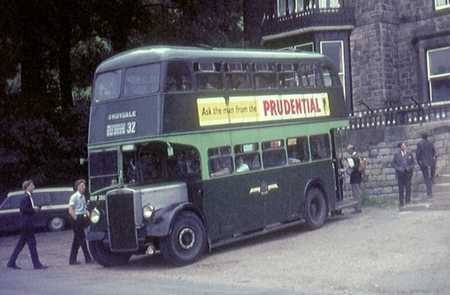

NNW 380_lr Vehicle reminder shot for this posting


15/11/15 – 16:14

I worked at Bramley depot and drove on the 54, 65 and 77 routes. It was these routes that helped me learn how to do "snatch" gear changes, especially on Kirkstall Hill. The only problem with these buses was brake fade, after two applications of the footbrake (no air brakes) the vacuum brakes were useless. I can recall having a brand new Mini brake suddenly in front of me, and I hit it from the rear making it a "short wheelbase" Mini. I will always remember the PD2/1s as being a sturdy vehicle.

David Thorpe


16/11/15 – 05:37

I agree with you wholeheartedly David regarding the vacuum brakes on the PD2s – and believe me the brakes on the 30 foot elegant PD3s were even worse. As local folks will know, The Leeds PD3s in their time bore the brunt of the extremely busy Moortown/Roundhay/Middleton/Belle Isle former tram routes and I’ve had some alarming near misses with them when fully laden, and I think I can honestly claim not have been a "nutter" putting timekeeping above all else like some ill advised chaps did. I’ve driven PD2s/PD3s for several operators and the same problem has arisen with them all, and I’m sure that this was n reflection on maintenance – it was simply a characteristic of the Leyland design. In fact a very good friend of mine, a conscientious driver, had his own method of ensuring that the PD3s would stop safely – on approaching every stop he would apply maximum revs and execute a faultless change down from top to third – I doubt if this reflected favourably on fuel consumption but I’m sure that LCT could stand that due to their well known "run ’em on fresh air" policy. Now very oddly, I’ve driven a heck of lot of PD1s – one of my very favourite models and very appealing too – but their brakes always seemed far more up to the job. This is most strange because in size, weight and passenger capacity they were virtually the same as the PD2 and no doubt had similar or identical braking systems. Despite the enormous and widespread success and popularity of the PD2s/PD3s this aspect will no doubt remain a mystery for ever.

Chris Youhill


16/11/15 – 15:22

I paid a visit to the excellent Dewsbury Bus Museum open day yesterday. The highlight for me was a trip on the superbly restored West Riding lowbridge all Leyland PD2/1. What a tribute to Leyland quality – and I’d forgotten that Leyland pre dated the lightweight Orion with no interior panels below the upper deck waist rail. David comments on the all Leylands being a sturdy vehicle, this is borne out by my experience of the Sheffield buses of this type, especially the 1947/8 builds with the polished interior wood finish. Chris Y comments on brake performance on PD2s and PD3s. My experience is that the air braked PD2 was ok, the air braked PD3 less so. Spare a thought for drivers with the sole vacuum braked PD3/3 with PMT (see elsewhere on this site for H811) whilst all its brethren were air braked.

Ian Wild


17/11/15 – 11:01

Most interesting views Ian, and to be honest I’ve never driven an air braked PD2, all mine have been vacuum – apart perhaps for the one "RTL" that I drove, that being one of the ten Leeds City Transport preselector models 301 – 310. I had booked overtime at a different garage to my own in order to enjoy such a drive when the class of ten was down to two of three. I was so delighted by the experience that I don’t recall any issue with the brakes on the three hour piece of rather "gentle" work, consisting of dead mileage and duplicates.

Chris Youhill


17/11/15 – 13:40

I recall a photo of an impeccable SL "RT" on the roof of a garage, some time ago, Chris Y. You’ve also driven an "RTL". What characteristics were different between the two? Or maybe you don’t remember, so relaxing was the experience with the RTL!

Could someone explain what the little white oblong box under the canopy, centre-front was all about?

Chris Hebbron


18/11/15 – 07:18

Chris H – well in simple terms Chris "everything was different" as with any AEC/Leyland comparison. The Leyland steering was far more positive and the AEC steady tickover produced a totally different effect from the flywheel/gearbox than did the delightful "hunting and gentle wobbling" of the Leyland. I don’t know if there was much difference in top speed but perhaps the Leyland might have just had the edge, and certainly had less tendency to alarming leaning when loaded. Both vehicles of course wonderful and highly successful in their different ways, such is the delight of variety. The rooftop garage that you mention would of course be Armley – the rooftop park was exactly the same size as the garage beneath and must have been capable of carrying an unbelievable weight. When Samuel Ledgard died in 1952 practically every withdrawn vehicle from Day One was up there – yes, including the original charabancs from 1912 – if only the preservation funds and movement had been as prolific then !!
Regarding the picture of NNW 380 in this topic, the little white box is the illuminated "Limited" sign – a moderately successful device for discouraging passengers from boarding on certain peak services where boarding and alighting stops were "limited" for the benefit of longer distance passengers. Quite a number of the blighters though were adept at taking a calculated risk by paying the minimum fare applicable but baling out in the heavy traffic which they knew was to be expected – they considered that the dearer fare was worth it for a quicker journey home. This was really anti social in perhaps the same way as people nowadays who operate pelican crossings and then cross against the red man causing traffic to halt for nothing later.

Chris Youhill


18/11/15 – 07:20

I asked this in another forum a couple of weeks ago Chris, and was informed it was to display ‘LIMITED STOP’.

Stephen Howarth


18/11/15 – 07:27

Even I can tell you that the little white oblong box could be illuminated to say "Limited", Chris.
My memories of LCT were certainly these and those bare metal engine covers, which seemed to appear about the time of the tram replacement scheme in the 1950’s. That’s why that similarly treated "classic" Crossley is a mystery: as well as a few cranked seats, did other 50’s Leeds buses have rearward facing front bulkhead seats?
Did you notice, too, that the 1952 Regent III in the Gallery is from Roe’s big window period, whilst the Daimler/Orion shows, by contrast, what a miserable looking design these were. Good Pics though.
What a smart livery, anywhere, any bus. Progress is not inevitable…pink and puce?

Joe


Quick links to the  -  Comments Page  -  Contact Page  -  Home Page
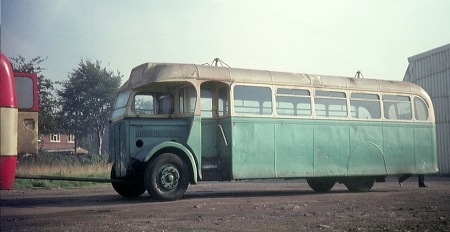


PMT – AEC Regal I – KEH 608 – S315

PMT - AEC Regal - KEH 608 - S315
Copyright Ian Wild

Potteries Motor Traction
1946
AEC Regal I
Brush B34F

This shot shows PMT S315 an AEC Regal I about to be towed away from Milton Depot for preservation by Hollis of Queensferry ex Western Welsh Leyland Royal Tiger FUH 424 on 10th October 1970 – wonder what happened to it?
The engineless vehicle had been in use as a canteen/mess room inside the depot for a number of years until modernisation came in the form of a block work structure in its place. The large protuberances on the roof are mains light fittings used in its mess room role. The bus looks remarkably intact although obviously would be short of some interior fittings.

Photograph and Copy contributed by Ian Wild


17/07/11 – 12:24

A most interesting vehicle – the removal of the awful "domestic wheel spats" and the restoration of the rear mudguards would be quite a useful start in its restoration.

Chris Youhill


17/07/11 – 12:29

Strange how unattractive the vehicle looks with ‘spats’ over the rear wheels. Were they an original feature, or an attempt to fool the mess’s customers into thinking it really wasn’t a bus at all! Where is/was Milton Depot? Funny thing about streamlining in general. IMHO, the LNER’s A4’s always looked superb with streamlining, but better without the their spats. Bulleid’s Southern Railway Battle of Britain and sister classes always looked much better after they were rebuilt as ‘proper’ steam engines! But I digress!

Chris Hebbron


17/07/11 – 18:30

Definitely not original Chris – notice how the bus is now fitted with only an inner single rear wheel each side. The new "spats" are built in with beading and there are no release catches to be seen. The routine changing of wheels would have been made impossible with such fittings, and the sooner they’re removed – maybe already have been by now – the better eh??

Chris Youhill


18/07/11 – 07:25

The rear wheel covers were definitely fitted when it became a static mess room. Milton Depot was on the northern side of Stoke on Trent, on the A5009 near its junction with the A53 Leek Road. It’s over forty years now since the bus was taken for preservation – I have never seen any reference to it since so I assume it has been scrapped – unless someone knows differently?

Ian Wild


18/07/11 – 11:35

Just a note to point out this bus is fitted with the pre-war style bonnet, radiator and front wings, so would be a Regal rather than the Regal mk.III that was introduced for the home market around 1947/8.

Eric

Thanks Eric I have corrected it, my mistake.

Peter


19/07/11 – 17:01

The "Surviving Single-Deck Halfcab Buses & Coaches" website gives this entry:-
Potteries S363 > S315 (in 1953), Regal {O6624981} / Brush B34F, 1946, KEH 608, Tom Hollis, Queensferry, N.Wales. Sold by 1992. Scrapped?

I think that we should fear the worst.

Roger Cox


21/07/11 – 07:34

I’ve been trying to find a little more information about the batch that this was from because I have a good memory for registrations and I remembered that Silver Service of Darley Dale had one. I have been unable to find a PMT fleet list anywhere so all I had to go on were old copies of Buses Illustrated for 1961. Silver Service bought KEH 602 in 4/61, KEH 603 and KEH 609 were reported withdrawn in 4/61 and KEH 600 went to Eagre (contractor) Scunthorpe in 7/61. The interesting thing is, all of these are recorded as having been lengthened to 30ft and having had Weymann 39 seat bodies fitted. The vehicle above, KEH 608 is correctly reported as being a mess room at Milton depot but no mention of the body. Does anyone know if this was the only one of the batch not to be lengthened and retain it’s original body?

Chris Barker


From the fleet history 2PD1 (price 10/6!) it shows that S306/7/14 were lengthened to 30 foot and re-seated. S309/10/2/6 had the chassis lengthened and were fitted with Weymann B39F bodies. This left S305/8/11/3/5 in original condition.
I won’t attempt to go into any more detail as the fleet history of PMT is far too complicated and I’ll end up tied in knots. It was a fascinating fleet!

David Beilby


25/07/11 – 08:54

The engineering feats accomplished by PMT make the fleet history somewhat complicated.
There is a fleet list (to 1977) within Geoffrey Smith’s 1977 history of the company, and the text explains to some extent (without identifying exactly which bus got what outcome). Unfortunately his 2011 book does not attempt to repeat/update this.
From the 1977 publication –
KEH 598 – 609 (AEC Regal / Brush B34F) were delivered in 1946 as fleet number 353-364, re-numbered in the post-1951 scheme to S305-316.
Between 1952-55 there was a re-bodying programme
Four of the batch received 1949 Weymann bodies (lengthened to 30ft) that had been new on a batch of Leyland OPD2 chassis (yes, single deck PD2s) which in turn received either new Northern Counties double deck bodies, or 1951 NC double deck bodies that had been fitted to pre-war Leyland TD4s.
Another five of the batch had their Brush bodies lengthened to 30 ft. This suggests that only three of the batch retained their original bodies unmodified. This contradicts what’s been quoted from the fleet history above. However, the 1977 book includes a photo of S313 in lengthened form. The one pictured above also looks lengthened – the original body style did not have 5 full length windows. The Milton garage was originally owned by the Milton Bus Company, which was taken over by PMT in 1951. Milton closed in 1980 as part of the ‘MAP’ retrenchment. The building seems to have been quite basic. Photos of past PMT garages including Milton can be seen on the Stoke Museums website here. The land around Milton Garage was occasionally used as a parking area for withdrawn vehicles, e.g. those taken over from independents and not used.

Jon


17/03/13 – 15:45

The Milton Regal was stretched. The fleet number had an 8 in a circle. I visited the Hollis collection to do an inventory soon after he acquired the Regal, sadly it had been kept in open storage on a old colliery and had been heavily vandalised and had been scrapped.

John Cooke


Quick links to the  -  Comments Page  -  Contact Page  -  Home Page


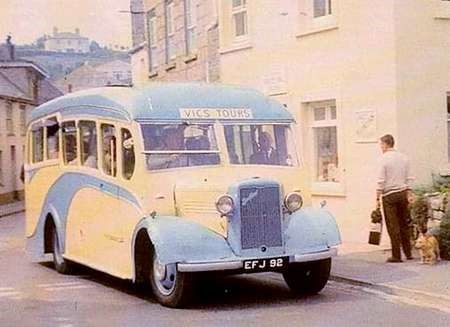
Vics Tours (Isles of Scilly) – Bedford OB

Vics Tours (Isles of Scilly) - Bedford OB
Copyright Richard Leaman

Vics Tours (Isles of Scilly)
1946
Bedford OB
Santus ???F

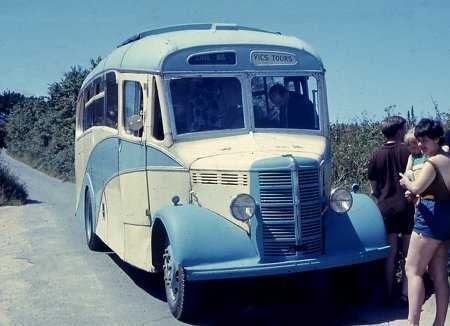
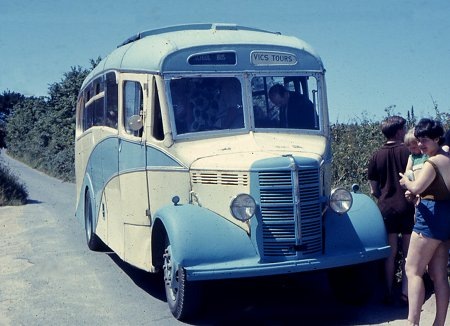
As several enthusiasts have said on these pages, the Bedford OB was a very special model and has a place in many a bus spotters heart. I took this picture of an early version operated by Vics Tours of St. Marys Isles of Scilly whilst my parents and I were on a day trip from St. Ives Cornwall. It was a boiling hot day with temperatures up in the 90’s on Wednesday 29th June 1966 and I can even tell you it was 1.20pm! You will see that it is unregistered, was not taxed and did not have insurance as confirmed by the driver but he explained that as it never got above 20mph, it didn’t need any! It was a fine example of the famous gearbox whine and may well have had a busy life before going to the Islands. It boiled whenever we stopped and the wet patch under the radiator shows the last top up! Also it had a 1920’s Klaxon horn used vigorously at all junctions..this stop was called "Motorway Services"! I have no details of any previous owners but would guess it to have been a very early build and maybe even a 1939 version with a body rather different from the Duple normally fitted.
The day was one of the best we ever had! It was a day trip operated by Steven’s Coaches of St. Ives harbour from their garage which was later destroyed by fire when a nearby shop caught alight. Our coach (SB?) took us to Penzance and we sailed on the Scillionian I, arrived in St. Mary’s, had our Vic’s Tour ride around the island, then a boat trip to Tresco. We left at 8am and got back about 8.30pm and all for 29/6d each! Two other elements of the day were hearing the Mamas and Papas singing "Monday, Monday" which was a big hit at the time and also the gentle, fruity aroma of one of the passenger’s pipe as he puffed it at times during the day…imagine that now!
As regards the Bedford, I have tried to see if it survived but fear it did not. An Austin coach from Vic’s fleet is or was preserved at Manchester Bus Museum but I think it may now be in Scotland. Sadly, the OB may have been pushed over a cliff when it reached the end of it’s useful life because the driver told us that was what happened to anything old so if any restorers fancy a dive beneath the cliff to the left hand side of the beach behind Hugh Town they may find an engine block to start the rebuild with!

Over to you experts who maybe be able to fill in details and just possibly even the whereabouts if it escaped the watery depths!

Photograph and Copy contributed by Richard Leaman


12/07/11 – 14:44

Are we sure that this is an OB? Some late model WTBs had the same radiator grille. It’s hard to tell from this angle, but it looks a little too short for an OB. I’m also perplexed about the lack of registration etc. As far as I’m aware the Isles of Scilly are part of Cornwall and obey the same laws as the rest of the UK (ie The 1930 Road Traffic Act!) Am I missing something?

Neville Mercer


12/07/11 – 15:48

You might be correct, Neville, but I took this photo of EFJ 92 in a similarly unregistered state in 1968. //www.sct61.org.uk/

Paul Haywood


12/07/11 – 16:14OB rad cap

I think it looks as if this bus as an exposed radiator cap the WTB with the Bullnose grill had a concealed cap and the OWB and OB had an exposed radiator cap from ‘The Bedford OB and OWB’ book by J Woodhams. Mind you it does look to only have four windows plus the two driver windows which could make it a little on the short side. There is something about the headlamp mountings that help distinguish the model, so that’s my bedtime reading sorted for tonight. 

Spencer


13/07/11 – 07:29

This photo pre-dates 1971 when the Scilly Isles were first drawn into the UK’s vehicle excise duty requirements. Prior to that the display of a registration plate was not compulsory and the costs of the roads on St Mary’s were charged to the rates.

Mike Grant


13/07/11 – 07:30

I am told that there is a certain area on the west coast of Scotland, accessible only by boat, which has several miles of road completely isolated from the rest of the world. And I hear tell that, (ahem!), certain aspects of normal traffic laws are interpreted in, shall we say, a somewhat relaxed fashion. There is little crime (in the normal sense of that word!) and therefore little incentive for law enforcement authorities to poke their noses in…

Stephen Ford


13/07/11 – 07:35

Neville and Paul..On that day, we saw several vehicles also without registration plates and I recall my father asking and being told that there were so few cars on the Islands that they didn’t worry. On the other hand, I saw that someone had imported a 1965 Ford Zodiac which did display DCV ???C ‘plate so maybe that was the start of formal registration?

Spencer..I just wish that I had more pictures to show you but that is the only one. I can tell you that it was indeed rather shorter than any OB/Duple and so I’m in the hands of the experts here. I would guess it to be no more than a 22 seat configuration. The front entrance was by a narrow sliding door and the seating was in a dark autumn leaf pattern, brown leather on the top, chrome aisle side handles.
Oh if only I could go back and take more images and get the full details…that’s the trouble when young, you never think ahead!

Richard Leaman


14/07/11 – 06:38

Richard, could the Bedford actually have a lorry chassis? MacBraynes operated quite a few service buses in the Scottish highlands that looked like OBs, but were in fact based on OL (OLAZ) lorry chassis. They were shorter in length than the OB, and many I believe had mail and luggage compartments accessed from a pair of doors at the rear. Passengers boarded in the usual manner towards the front. The melodious mechanical tones would have been the same for OB and OL too. Just a thought…..

Brendan Smith


14/07/11 – 18:55

Brendan I think you could be onto something there. I have on looking back and at the pictures always wondered if it was a lorry chassis because the length was "wrong" for any normal OB. As regards the rear doors..again I’m going totally from memory but I think it might well have had a door or doors for luggage. Now I have just discovered this website which shows plenty of pictures of the MacBrayne  Bedfords and the length looks right but the windows and doors do not match up..but..was the Vic’s bus an early version? Thinking about it, the short length would be perfect for Island use and clearly a good choice for "Vic’s".
Have a look through the massive picture file on that website (there are lovely images!) and compare the two bodies. The link is not conclusive but very interesting!

Richard Leaman


14/07/11 – 18:56

Useless information:
Road Tax was not introduced in Scilly until April 1st 1971. Prior to that, no number plates were needed, only the log book as identification for insurance purposes.

Glynne


15/07/11 – 07:33

Richard, thank you so much for pointing out the MacBraynes website. They are indeed lovely images. Unfortunately my family never ventured as far north as the Scottish highlands when I was young, so that beautiful livery in such settings is left very much to the imagination. It always seemed to fit perfectly with the breath taking scenery of the highlands, and MacBraynes was such an important part of highland life, transporting as it did local folk, tourists, parcels, mail and luggage in an efficient and friendly manner, from what I have read. Why politicians have to meddle quite so much with things that work so well beggars belief, but such co-ordination between bus, ferry, train and the Royal Mail was amazing given the geography of the region. Sadly such co-operation is no longer allowed in todays world of competition for competition’s sake, regardless of how inefficient it all now seems to be to many of us! It is pleasing to note however, that the spirit of ‘MacBraynes for the Highlands’ still lives on in those magnificently preserved vehicles.

Brendan Smith


15/07/11 – 13:58

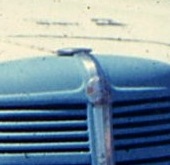
The ‘Passenger Chassis’ differed from the ‘Goods Chassis’  in that the differential was offset from the centre of the axel to the nearside by 11 inch to allow for a lower OB starting handcentral gangway. This meant that the engine was at an angle and not straight on the centre line as the ‘Goods Chassis’ . This resulted in a slightly different radiator grill for the ‘Passenger Chassis’  than the ‘Goods Chassis’ . The ‘Goods Chassis’  had a small circular aperture in the centre of the grill for the starting handle but the ‘Passenger Chassis’ had a small access door to the left of the centre. A closeup of Vics bus shows the aperture for the starting handle to be off centre it must of also lost it’s little door. So this must of been a ‘Passenger Chassis’.
It is a shame we can not see the steering wheel apparently early ‘OBs’ and ‘OWBs’ had a four spoke wheel and later ‘OBs’ had a 3 spoke wheel although not sure of the exact date for the change. All the above information was gleaned from J Woodhams excellent ‘Bedford OB and OWB’ book

Spencer


16/07/11 – 07:09

Spencer thank you for the information and indeed you are correct regarding the grille aperture. As the Caledonia MacBrayne Bedfords were known to be lorry specification chassis,. The picture of Vic’s bus is actually cropped slightly and a little dark but looking at the original, you can see the top of the steering wheel and a single, vertical spoke but that doesn’t really help re the number of spokes. It does look to be a simple plain bar and not a sprung version. So..it’s a short wheelbase or short bodied passenger chassis Bedford but it is keeping it’s history hidden!

Richard Leaman


17/08/11 – 14:43

I notice that the firm appeared in Little Red Books regularly. I’ve copies for 1956/7 and 1970/1 which list the fleet by chassis and bodymaker.
These don’t solve the query for this particular vehicle – but anyone with a 1966 edition might be able to shed some new light.

Mike Grant


18/08/11 – 07:57

I’ve got the 1967 edition of the "LRB" and Vic’s Tours appears not to be listed at all unless concealed by a surname. The only two operators listed for the islands in that edition are PC Trenwith and RC Perry of St Marys, operating six vehicles (3 Bedford and 2 Austin bodied by Duple, Heaver, "Sanctus", and two by Whitson, plus an all-Commer minibus) and Williams Bus Service, also of St Marys, with 1 Dennis and 1 Bedford (no bodywork details given).
It is worth noting, however, that the "LRB" was notoriously inaccurate. It frequently omitted very well-known operators and in the case of others gave fleet details that were up to a decade out of date. If the operator didn’t update their own listing nobody at Passenger Transport made any effort to do it for them.
As a teenage bus enthusiast in the 1960s the "LRB" was the cause of many a disappointment. I would travel miles to see rare types of chassis or bodywork only to discover (in most cases) that the vehicles had been disposed of ten years previously and all that remained were Bedfords with Duple Super Vega bodywork.

Neville Mercer


18/08/11 – 10:09

Vics Tours is the P V Trenwith & R C Perry which shows in later Little Red Books.
The 1967 and 1970/1 editions differ by one vehicle – a Bedford with Sanctus body – so we’re one step further forward in the identification.
An article in Buses Illustrated February 1959 suggests the firm had a pattern of acquisitions from an Exeter dealer, Beale’s and directly from mainland Cornish operators. There can’t have been too many Sanctus bodied Bedfords in Devon or Cornwall pre-1966. This may well have been one of them.

Just realised why the quotation marks were shown in Neville’s post. As the Leon thread has mentioned, the bodybuilder is Santus of Wigan.

Mike Grant


18/08/11 – 15:47

Mike and Neville..Thank you for the further research. I have done some detective work about Santus and found that it was an old coach building firm run by the Santus family who are very well known in Wigan but now as confectionery manufacturers.."Uncle Joe’s Mint Balls" apparently! Thomas Santus is listed as a Director of "Santus’s Motor Body Works Ltd of Greenough St, Wigan. He died on 6th April 1939 and it appears that the Company was taken over or absorbed by Northern Counties and/or Massey Bros. both of Wigan and well known coach and bus body builders.
I’m trying to trace any pictures but no luck yet. In one of those odd coincidences, this links with the Santus bodied Lion JP42 on the Leon thread! Fascinating!
What we now need is a picture of a Santus bodied vehicle to try to see if the general design features match up in any way. Back to the search button and I’ll see if I get any luck!

Richard Leaman


19/08/11 – 06:58

Well..via information on the "Leon" thread I now have found a Santus bodied Seddon coach which is here at this flicker link I have managed to put both pictures side by side and believe that I can see enough similarities in the design detail to think that the Vic’s Bedford is indeed the Santus bodied coach mentioned in the LRB as above. It is the fall of the side windows, the style of decorative body beading, the panel joints on the roof, the shape of the drivers door handle and the general proportions of the cab pillars that lead me to think that.

Richard Leaman


19/08/11 – 07:26

Richard, Santus didn’t give up coachbuilding until (at the earliest) 1951 – see my comment under the JP 42 thread. Also, according to a recent edition of Classic Bus, there is documentary evidence (birth certificates!) that the coachbuilding Santuses and the mint balls Santuses are not in fact related to each other despite the claims to the contrary by various Santus family members repeating what they’ve been told by their forbears. There were apparently two entirely different "William Santuses" in Wigan, alive at the same time, but entirely unrelated. Having dealt with the slapdash claims of various "family" and "local" historians over the years (with not a history degree between them) I tend to give credence to the birth certificates!

Neville Mercer


20/08/11 – 07:02

Neville.. thank you for correcting this "Santus" information. I obtained mine from a website called WiganWorld where there seems to be a wealth of local information which included the coach building/mint balls link! I did think it seemed an odd career move.
It shows how easily "history" can be rewritten with such confusion!
Re my above posting and trying to see if the Bedford was Santus bodied, I just wish that I had another picture to help. The picture I sent in has been cropped a little but further to the right is a lady who was on holiday from Manchester and she took some pictures but trying to trace here would be some job!

Richard Leaman


24/10/11 – 07:55

From a list I compiled some years ago Trenwith & Perry (t/a Vic’s Island Tours) had the following
Bedfords:
EFJ 92 WTB/Heaver C25F 1938 new 1952 acq 10/71 sold (P)
BDL 92 WTB/Duple C25F 1937 new 1953 acq c-/65 scrapped
DBU 78 OB/Plaxton C25F 1946 new 1954 acq c-/67 scrapped
CUW 82 WTB/Duple C25F 1936 new 1955 acq –/61 scrapped
FDL 782 OB/Duple C29F 1949 new 6/63 acq –/?? sold (P)
DBU 78 was recorded as Plaxton, but was probably Santus
Therefore in 1996 the fleet should have contained:
EFJ 92 WTB/Heaver,
DBU 78 OB/Plaxton or Santus,
FDL 782 OB/Duple, plus
GDL 25 Austin K4SL/Whitson C29F
MRL 865 Austin CXB/Whitson C27F
833 HCV Commer 1500LB/Commer M12 (re-reg SCY 39J)
U/R Morris J2/BMC M11 (re-reg SCY 8J)
Hope this helps!!

Clive Williams


25/10/11 – 07:23

I note that FDL 782 & GDL 25 bore IoW registrations.
The second one (Austin K4SL) would have been a rare chassis in the bus world, very rare with its Whitson body! The CXB was a newer version of the primarily wartime K4.

Chris Hebbron


26/10/11 – 05:59

Clive..thank you! So it looks near enough certain that "my" Bedford was DBU 78 first registered in Oldham during May 1946. My picture was taken in June 1966 so the poor bus seems to have probably been on it’s final year of service before being scrapped and, if the driver was being serious, was destined to be pushed over the cliff into the sea which he said was the way they dealt with all scrap vehicles. It sounds horrendously incorrect on every level these days but there were very few cars on St. Mary’s then and so the frequency must have been low thank goodness. Sad though because the Bedford had a particularly musical gearbox even for that model.

Regarding the other coaches that Clive has listed, the current operator and successor to Vic’s Tours has a number of pictures on their website…scroll down for the older vehicles. //www.islandrover.co.uk/photos.htm 

Richard Leaman


13/02/12 – 07:23

Just for the record, it is still the case that a vehicle operating on any island which has no tunnel, bridge or regular vehicular ferry service to the UK mainland does not require an MoT!

David Jones


11/03/12 – 15:26

I can confirm from the Oldham registration records that DBU 78 did indeed have Santus bodywork and was initially registered to Shearings Tours of Oldham in July 1946. It was on the Isles of Scilly from June 1954 after operating with Coombes of Torquay from August 1947 and Beale of Exeter for a short time in 1954.

Phil Thoms


12/03/12 – 16:14

Phil..thank you so much for at last completing the story of "my" Bedford. An interesting history to read and it appears to have had a 13 year life of service on the tiny island roads so no doubt was getting very tired when I took the picture. I believe it lasted until 1967 but no doubt met it’s breaker very soon after that…or had an rather watery end off that cliff!

Richard Leaman


17/08/12 – 07:16

I vividly recall a trip on the Vic’s Coaches Bedford – August 1964. I can still almost hear that gearbox!! To a 13 year old with a love of all things mechanical it was a wonderful trip. Really sorry I never had my camera (Kodak Brownie 127) with me that day.
Correct about old vehicles being pushed over the cliff – a later visit (1975) saw me wandering around amongst numerous engine blocks and bits and pieces – many were the mortal remains of pre-war Austins.

Robin Lawton


20/09/13 – 18:06

The fleet listing does not mention a Bedford SB Coach with Vic’s fleet 1980 to 1990 era 870 VAR

Peter Adams


19/01/15 – 07:32

It is wonderful to read the above comments about Vics tours, and the fleet list.
I was the driver of the bus when the photograph above was taken. I can be seen standing at the back of the group in the larger version of the photo.
I drove all the buses in the fleet list and had many hours of fun as a driver and tour guide. It has to be said that the buses were very tired at that time but they very rarely broke down.
Happy days!

David Rowley


01/10/18 – 06:04

There is an article on the Scilly Isles in Classic Bus 155, which says DBU 78 had a prewar Plaxton body (new coach bodywork being difficult to come by in 1946), though it doesn’t say anything about the body’s previous life. There must be a Santus connection somewhere, and the suggestion is made that perhaps it was Santus who altered and fitted the body for Shearings. If so, the alteration probably included the exterior trim, which looks very 1946 Santus to me.

Peter Williamson


02/10/18 – 06:59

According to the PSVC Bedford OB chassis list book C1252 DBU 78 was new with a Santus C25F body in 7/46. There is no mention of a pre war Plaxton body.

John Wakefield


05/10/18 – 07:45

John, the author of the CB article is aware that some sources say it was a Santus body, but disagrees, and so do I now. Please ignore what I said about Santus altering the trim – that was just ignorance of what prewar Plaxton bodies looked like, together with the fact that a piece of the original trim seems to have gone missing by the time the above photo was taken. I’ve now compared photos in the article with one of a 1939 WTB in Alan Townsin’s Plaxton book, and there is no doubt that it was a late 1930s Plaxton body.

Peter Williamson


06/10/18 – 07:06

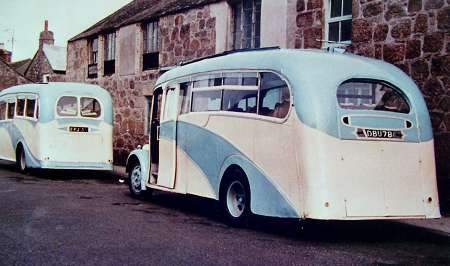
DBU 78_2

Here is a pic of the rear end of DBU 78, it does appear to look like a Plaxton body, the most likely answer is that it was probably modified and fitted to the OB chassis by Santus for Shearings. It would have required quite a bit of modification as presumably it would have been originally fitted to a WTB chassis which is much different and shorter than the OB.

John Wakefield


09/10/18 – 07:41

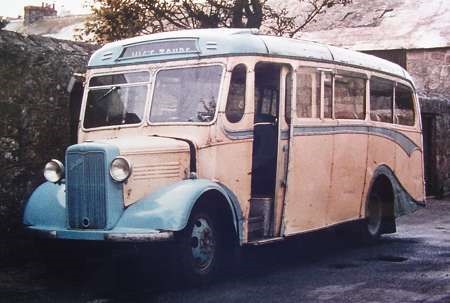
vics

Looking through my collection of OB/WTB photos I came across this one of a Vics Tours Bedford WTB with what looks like a Duple body, again no front number plate so does anyone know its id.

John Wakefield


18/10/18 – 07:33

Apparently BDL 92 is a Duple C25F

John Wakefield


01/12/18 – 06:52

Is this the bus that was given to two Enfold teachers, then went to Dunlopillo Rochdale, then to Manchester Transport museum and now in Devon at WHOTT?

Donald Williams


02/12/18 – 07:38

Donald, no the WTB that’s with WHOTT is EFJ 92 with Heaver body.

John Wakefield

09/08/21 – 06:09

My Son has just sent me a photo of a Bedford OB for sale in Norfolk for preservation FDL 842, this being an Isle of Wight registration, I looked it up on the I.W. Bus and Coach regs; [a listing by Don Vincent from the old I. W. Vehicle vehicle taxation records] and found it was new to Pearces [White Heather] of Ryde, 17th January 1949, they sold it to Moss Motors of Sandown in March 1963 who sold it straight on to Vics Tours, it later returned to the mainland, the current seller has had it since 1994.
I cannot find FDL 782 in any of my I.W.Records so was it FDL 842?

David Jolliffe


26/08/21 – 05:56

Looking in the PSVC Bedford OB Chassis Lists book there is no FDL782 so it must be an error by Clive Williams in his listing above.

John Wakefield


26th June 1966 St Mary's Vehicle reminder shot for this posting


26/05/22 – 05:50

This may interest…..

EFJ 92

Vic Brumby


28/05/22 – 06:23

EFJ 92 is a 1938 Bedford WTB with Heaver C25F body.
It was delivered new to Taylors’ Central Garage (Exeter) Ltd in June 1938. It was sold for further service in February 1952, to Vic’s Tours of St. Mary’s on the Scilly Isles, and operated with Vic’s for a further 19 years until October 1971 when it entered preservation. It had been with The Greater Manchester Transport Society since 1985, but was purchased by WHOTT in January 2009 and is their current restoration project.
Info courtesy of the West Country Historic Omnibus & Transport Trust website.

Petras409


Quick links to the  -  Comments Page  -  Contact Page  -  Home Page


All rights to the design and layout of this website are reserved     

Old Bus Photos from Saturday 25th April 2009 to Thursday 4th January 2024