Old Bus Photos

Northern General – AEC Routemaster – EUP 405B – 2105
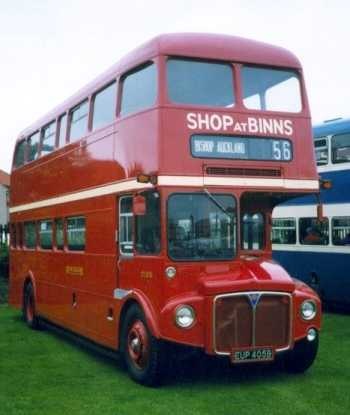
Northern General - AEC Routemaster - EUP 405B - 2105                Copyright Ronnie Hoye

The Northern General Transport Company
1964
AEC-Park Royal Routemaster
Park Royal H41/31F

Pictured at the Seaburn Bus Rally, this 1964 Routemaster has been beautifully restored to its original livery and is now part of the North East Bus Preservation Trust Ltd collection; it was one of the second batch to be delivered. I know the two batches differed slightly, but I’m not sure if it was only that the first ones had rear wheel spats. Prior to the Routmasters, the last front engine half cabs to carry the Northern name were the 1958 PD3’s with Orion bodies ‘Sunderland District’s were rear door Burlingham bodies’ before the Routemasters arrived on the scene their were then three or possibly four batches of PDR1 Atlanteans with both MCW and Roe bodies. Northern ran a lot of longer routes alongside United, when they introduced the front entrance Bristol Lodekkas Northern decided it was time to replace the rear door Park Royal bodied PD2’s on these routes with a more modern vehicle, but rather than use Atlanteans they bought the Routemasters specifically for the purpose. I think reliability may have been a factor as the early Atlanteans were ‘A tad temperamental’ Northern specified the Leyland O600 engine and the same gearing as the Green Line RMC’s, as far as I’m aware they gave excellent service and reliability was never a problem. Our depot didn’t have any so I must be one of the few drivers at Percy Main to have driven one on service, I was on the number 1 which ran between Whitley Bay and Lobbly Hill Gateshead, my bus ‘an Atlantean’ broke down at Team Valley and a replacement was sent out from Bensham depot, it turned out to be a Routemaster. I only drove it for a couple of hours but found it a very nice vehicle to drive.

Photograph and Copy contributed by Ronnie Hoye


13/05/12 – 08:41

…..and I spent many a happy hour driving AEC and Leyland engined ex LT RMs in Reading for Reading Mainline. I now have the occasional charge of a preserved green RML. Still nice to drive but unfortunately, like most RMLs, re-engined.

David Oldfield


13/05/12 – 18:49

What make was/were the replacement engine(s) and did the conversion entail any gearbox/transmission changes, David? In the back of my mind, Iveco comes to mind.

Chris Hebbron


14/05/12 – 07:43

There several experiments using Cummins C (Javelin 8.2), Scania (9.2), DAF (?) and IVECO (7) engines. DAF never got beyond the one experimental, the others went into "mass" production. I don’t know the numbers, nor how it was decided to allocate which engines to which (batches of) vehicles.
These vehicles tended to keep their AEC/LT (semi)automatic gear-change. The vehicle I regularly drive – and will be doing so next week in Slough – is a 1966 RML with IVECO engine with original gearbox which still operates in either semi or fully automatic modes.
From the cab it is very obviously a re-engine although, surprisingly, from the saloon it sounds more like a "proper" vehicle. I can only surmise that this is because it still has the original gearbox. It does not, however, have the performance of an AV590 or 0.600 – nor the real sound.
The last refurbishments, however, were also made to comply with "Euro…" regulations and have the Cummins B (5.9) engine and Allison fully automatic gearbox both found on the Dennis Dart. They are therefore cruelly, but aptly, known as "Dartmasters". The latter have also totally changed the character of the cab.

David Oldfield


14/05/12 – 09:29

Thanks, David, for that interesting background information. It’s also interesting that the original engines performed better than their replacements. Maybe some of it is strapping the engines up with ‘save the world’ technology, understandable, but not conducive to performance or fuel consumption!

Chris Hebbron


14/05/12 – 14:57

As a P.S. to my comments above. It’s all speculation, but given the reputation for build quality and reliability that the Routemaster built up with Northern, I think it’s safe to assume that if the RML had gone into production AEC would have loaned a couple to Northern for evaluation purposes, then who knows?

Ronnie Hoye


14/05/12 – 18:30

Ronnie; do you mean RML or FRM? The Northerns were front entrance RMLs (or RMFs in London language). FRM1 was the rear-engined prototype which Leyland knocked on the head because it competed with its own new Atlantean.
There should have been three prototype FRMs – one of the other in Sheffield Transport colours. Alan Townsin said that both Yorkshire Traction and Northern General had already shown an interest in the new model "off the drawing board". Having tested it for "Bus and Coach" in August 1967 he concluded that "…..the general impression was of a vehicle which made everything previous seem out of date, in much the same way as the RT in its day."

David Oldfield


14/05/12 – 18:46

It’s an age thing David, I did mean the RMF

Ronnie Hoye


15/05/12 – 07:34

It’s an age thing for most of us who use this site! What day is it nurse?

David Oldfield


15/05/12 – 07:36

I wish I’d been issued with fingers instead of thumbs, FRM, the one that Leyland couldn’t wait to kill off, in much the same way that they did with the Fleetline, as the Americans say ‘if you can’t beat them, buy them’

Ronnie Hoye


15/05/12 – 07:38

Chris, can I just point out that David’s comment about the performance of replacement engines was specific to IVECO, which was the smallest of the units in the original experiment. I recently had a ride on an RM with a Scania engine and it went like a bat out of hell! It also made some nice traditional sounds which were entirely compatible with the RM’s transmission.
As regards FRM1, this still exists of course, and it is very special. I once had the pleasure of riding on it, and it felt like meeting the Queen!

Peter Williamson


15/05/12 – 13:31

Very interesting comments, David, on the FRM. I never saw the ‘Bus and Coach’ article, (yes, I ought to have seen it!), and have never seen any pictures of the prototypes, but it sounds as if it had great potential. Leyland, as Ronnie points out, were eager to kill off anything that competed with a Leyland product. Operationally, the Fleetline was a far better bet than early Atlanteans, being more economical and less expensive to maintain, and it would have been a boon to the industry to have had an AEC alternative, too. Leyland’s arrogance, which manifested itself in many ways at that time, was a tragedy for the whole of the British motor industry.

Roy Burke


15/05/12 – 18:00

There were other interesting possibilities which Leyland killed at birth. The only really decent and successful rear-engined single-decker was the Bristol RE. It eventually had the option of Leyland engines (which I approve of) but another option "on the books" which was neither promoted nor taken up was of the AH691 AEC engine. Ulsterbus (and all offshoots) had shown a great interest in the AEC option but were dissuaded by Leyland from taking it up – just as later, New Zealand were "persuaded" to take the Leyland 510.

David Oldfield


16/05/12 – 07:47

In some ways fitting a Scania engine into a Routemaster is the supreme irony. The Routemaster started life with AEC, they in turn became part of British Leyland ‘not to be confused with Leyland Motors’ At the time of the ‘merger’ AEC had designs for a new vehicle, but BL in their wisdom or otherwise decided not to go ahead with it, all the plans ‘including those for a new engine’ were sold to Saab and the result was the 80 and 100 series and every vehicle since, so I suppose you could argue that by using an AEC designed Scania engine in a Routemaster the wheel has in effect turned full circle

Ronnie Hoye


22/09/13 – 07:51

Regarding the allocation of re-engined Routemasters in London, the rough rule was by operating group: South London and London General got Iveco re-engines and everywhere else got Cummins. The reasoning was, the DMS buses also had Iveco engines at these garages.
I used to like the Routemasters on the 130 from Newcastle to Sunderland as a boy.

Mick


22/09/13 – 14:35

When were the last of these vehicles withdrawn and what happened to them afterwards?

Chris Hebbron


23/09/13 – 05:57

The answer to the first question is that Northern last used them in service on 16th December 1980. Someone else will have to answer the second bit!

Dave Towers


25/09/13 – 18:18

I have a Classic Bus magazine from 1994. The article must have been about the late 1950s, when they were in the process of creating the Atlantean. In it were clear, side by side pictures of the two prototype Leyland’s running on a route for evaluation by a bus company. One had the engine in front of the front axle, with a front wheel drive. It made the steering very heavy & would tilt up without the conductor on the rear platform. During tests they always made sure they had a conductor on. The other type had the engine on the rear platform & a full front. There is also a rear view picture of a top secret third type, which from memory only got to the test track at night, but was later broken up & the parts used on a conventional layout. If anyone would like further information I will read it again for more accuracy. If anyone would like the magazine, you can have it, for postage costs only.

Andy Fisher


26/09/13 – 06:30

I drove a Routemaster just once, at an LT Open Day – OK I paid a few circuits "on" so had a few laps. Compared to the PD3 on which I did my PSV training the Routemaster felt like a real driver’s bus – everything light to the touch and set up just right, although the horizontal gear-selection gate felt odd to start with. However, I’d take a PD2/3 over a Lodekka anytime – for me the Lodekka’s driving position, with that raked steering-wheel, was just uncomfortable/awful.

Philip Rushworth


26/09/13 – 14:53

Philip, don’t forget that the horizontal gear-selection gate was probably specified to replicate the pre-selector used on the many thousands of RTs with which all LT drivers would have been familiar (to say nothing of the many municipalities who operated pre-selector Regents).

Stephen Ford


26/09/13 – 14:53

The disposal details of all 50 Northern General Routemasters (2085-2134) are to be found at www.countrybus.org/RMF/RMFa.html  
This site, Ian’s Bus Stop, has full life histories for most London Tansport classes and closely related classes, e.g. London Country Leyland Nationals. Well worth a visit.

Dave Farrier


28/09/13 – 16:14

Thx, Dave F.

Chris Hebbron


01/10/13 – 06:30
mrm

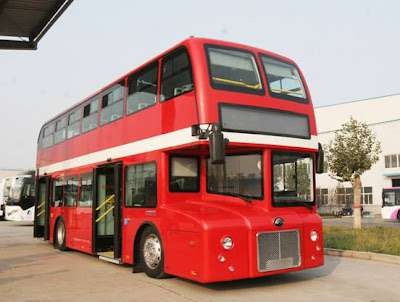
Whilst on the subject of the Routemaster, has anyone seen a photo of the Chinese Youtong-built vehicle destined for Macedonia, designed with more than a nod at London’s Transport’s ubiquitous product!
(Copyright unknown).

Chris Hebbron


01/10/13 – 10:45

Oh – if only Colin Curtis could see this!!!!!

Michael Hampton


01/10/13 – 17:46

The Youtong vehicles were ordered as an up to date version of the buses that Skopje took second hand from LT in the early 1960s. Those of course were RTs but they have always been regarded as something special in the minds of the citizens and, obviously, the authorities. As they didn’t buy any second hand Routemasters at the time LT were withdrawing them, the new vehicles can probably be regarded as competing with the Borisbus in terms of using old shapes and ideas in a modern format. Neither would win a beauty contest but both are at least interesting and controversial. Just a pity that no British manufacturer could cater for Skopje’s needs.

Phil Blinkhorn


01/10/13 – 17:47

Yes, he only missed out on the news by a few months.

Chris Hebbron


01/10/13 – 17:48

Is this going straight into the Uglibus section?

Joe


26/10/13 – 17:11

I was very interested in your section on Routemasters, particularly in the Tyne and Wear, County Durham areas 1970’s. One of your correspondents notes the 130 route, Newcastle to Sunderland. I can remember this being route 40 prior to 13O and continuing to Hartlepool or Middlesbrough. I am interested in obtaining any further info on this. I am also keen to bring back some more memories of routes south of the Tyne from this period and can recall a lot of them but would like to see a list. Do you have any idea where I can access such detail?

Dave Alcock


27/10/13 – 16:12

The 40 was a rather hybrid route, dating historically to the owners of various parts of it before ‘grouping’. From the thirties until NBC days it was really two overlapping routes; United’s 40 ran from Middlesbrough to Sunderland via West Hartlepool, and that of Northern / SDO ran from West Hartlepoool to Newcastle via Sunderland. The overlapping section was a joint operation, with all of the companies running journeys from West Hartlepool to Sunderland to give a more frequent headway.
The United / Northern territorial boundary was at Easington Village, where passengers had to rebook, and United would run further short workings within their section, as well as frequent duplicates to fit in with mining shift times. In the same way Northern had short workings between Newcastle and Sunderland.
The United timetable only showed the Newcastle journeys as brief details, and the Northern timetable ignored the Middlesbrough section altogether (indeed anyone travelling from Sunderland to Middlesbrough would have found the Durham District routes D1 / D2 to be quicker.

David Todd


31/12/13 – 07:20

It’s great reading all your comments,I was a conductor on the trollybusses in NW London 1958-1961 then went onto the RMs we changed overnight. The RM was a wonderful bus but in those early days some of them were experimental. We had RM 1134 at Stonebridge Park and the first time I took it out as a driver I pulled into a bus stop applied the brakes which came on then went off I braked harder and was nearly thrown through the windscreen. Then we had different suspension Dunlopillow was one where after a short while the conductor was sick because the rear of the bus just kept bouncing up and down all day. All garages were told to drive the bus in different ways we were told to drive in automatic at all times, Cricklewood were told to drive in manual it was supposed to save on fuel, I found that when the bus was fully loaded in the rush hour because the gear change from 1st to 2nd was so quick you lost all power so I used to pull away in auto click into second manually gun it then back into top. I last drove an RM in 1965 when I left, I am now 72 and have the chance to climb back into that wonderful bus for one more run {only on the test track at Canvey Island Essex} but I am looking forward to it you never forget how to drive them.

Bix Curtis


24/04/18 – 06:47

Just to say in my opinion the last Routemasters front design was the best looking and handsome bus to this day.
The bonnet, grill, lights etc., never seem to get dated.
Anybody agree?
A real Bus!

Chris Campbell
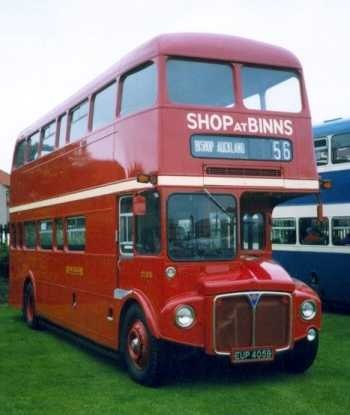

EUP 405B_lr Vehicle reminder shot for this posting


10/06/18 – 08:50

Can anyone help me with info for a model of a Northern Routemaster in yellow. Three were painted in yellow for Tyneside area operation but one carried ‘GATESHEAD’ fleetnames, the other 2 ‘Northern’. Can anyone tell me which one it was that carried ‘Gateshead’ please.

Rob


11/06/18 – 05:56

Whilst the undermentioned website lists all 50 Northern General Routemasters with photographs of each one (and in some cases a history of allocations, liveries etc) some vehicles have only the dates new, date renumbered and date sold. //www.northernroutemaster.co.uk/
There is a photograph of FPT 595C (Fleet number 2125 renumbered to 3109) in yellow but I can’t read the fleetname but it looks like Northern.
On the SCT61 website there is a photograph of RCN 687 (Fleet number 2125 renumbered to 3109) in yellow with the Northern fleetname. On the Northern Routemaster website there is a note regarding this vehicle: ‘In August 1975 this was one of two Routemasters to receive a less striking version of the Newcastle PTE yellow livery’. Photo here: //www.sct61.org.uk/ng3071
Hope the above helps narrow down your quest I don’t know.

David Slater


23/06/18 – 06:51
NGR_1

NGR_2

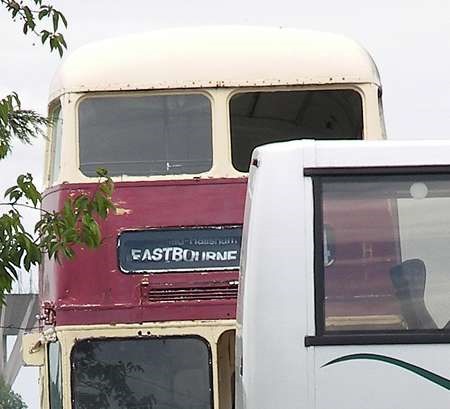
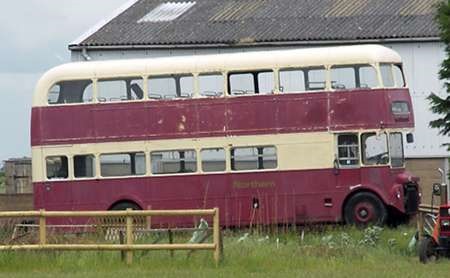
These pictures of a Northern General Routemaster in a sorry state were taken in June 2014 at the yard of Carnell’s Coaches, Long Sutton , Lincolnshire. Carnell’s had previously gone into liquidation in November 2013, though the site still seemed to be in use, though access was not possible when I took the pictures. I cannot identify the actual bus because no number plate or fleet number can be seen. The destination blind shows "Eastbourne", and "Hailsham" is also just visible, which might give some clue to its earlier operation and hence identity. I returned to the site again shortly after to take another look, but the vehicle had then gone.

Roger Cox


Quick links to the  -  Comments Page  -  Contact Page  -  Home Page
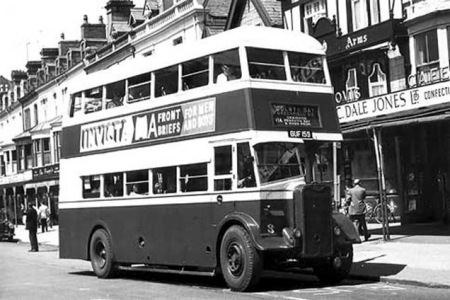


Llandudno and Colwyn Bay – Guy Arab II – GUF 159 – 3

Llandudno and Colwyn Bay – Guy Arab II – GUF 513 – 3
Photograph by ‘unknown’ if you took this photo please go to the copyright page.

Llandudno and Colwyn Bay Electric Railway Co
1945
Guy Arab II 
Northern Counties UH30/26R

I am, basically, a tram and trolleybus enthusiast, and, unfortunately, I never had the pleasure of sampling the delights of the LCBER. By 1955, money was in short supply, and the trams were just about worn away, and the company decided to switch to motorbus operation.
I did sample these, in 1956/7, and remember them with great affection. I think that the history of these buses, which succumbed to the mighty Crosville in 1961, has been largely overlooked, perhaps because of the nature of the tram to bus conversion, which was particularly noxious for a hard-core of true bred tramway enthusiasts!
There were a dozen or so ex Southdown utility Arab 11s (as shot above), with 3 makes of body, supplemented by 2 later East Kent examples. There was also an ex-East Kent TD5 used only for the initial phase of driver training, and 2 ex Newcastle NCB bodied Daimler COG5s of 1939 vintage. One of the latter was converted to open top in 1956, and there were plans to likewise convert some of the Guys. I can vividly remember riding on the Guys, which reminded me at the time, of Bristol K5Gs, probably because of the crunchy gear change, not always well executed, and the growl of the 5LW.
It would be very interesting to hear if other enthusiasts remember this fleet with the same affection as I do, and if there are any other photos out there!
I do have an exact fleet list should interest demand it!

Photograph and Copy contributed by John Whitaker


11/05/12 – 08:09

Looks like Mostyn Street, Llandudno. Can anybody with more detailed knowledge of the area confirm or otherwise?

Stephen Ford


11/05/12 – 09:38

This photo has brought very fond memories of by first visit to Llandudno in 1956. Seeing these Guy Arabs operating as an independent Tramway Company gave me a feeling of David and Goliath as Crosville seemed to be the main operator in the area.
For once I ignored the Crosville buses and rode on the LCBER buses to their depot at Rhos-on-Sea where a few trams still remained in the yard. I have always found bus companies operating with Tramway names fascinating as they reflect a proud heritage. How many other bus companies were operating with Tramway Company names in the fifties? Sadly LCBER was taken over by Crosville in 1961.

Richard Fieldhouse


11/05/12 – 12:00

One company that springs to mind is the Northern subsidiary Tyneside Tramways and Tramroads. A title they kept until they disappeared into the parent company in the seventies.

Chris Hough


12/05/12 – 07:44

I think Bristol Tramways and Carriage Company Limited was not renamed Bristol Omnibus Company Limited until the 1950s. Now First Somerset & Avon Limited it must surely be one of the oldest legal entities in the public transport field still operating as it was incorporated on October 1st 1887

Nigel Turner


12/05/12 – 07:46

Great posting and wonderful photo John, thanks very much. It just goes to show that many of the most interesting items on OBP are about lesser known operators, and LCBER are an excellent example of that. They were clearly very cost conscious, buying wartime bodied Guy Arabs; many operators had rebodied such vehicles years earlier, and 11/12 year old ones were hardly in the first flush of youth. It’s also interesting that they bought a Leyland TD5 for driver training when they had no Leylands in service, as is the decision to buy the two Daimlers with, presumably, pre-selector gearboxes, amongst the (very) crash gearbox Guys. And how did passengers react to the replacement of smooth and quiet electric traction with trundling 5LW’s? A final question, John – what was LCBER’s livery? It looks smart in your photo, I must say.

Roy Burke


12/05/12 – 07:49

I can remember Bristol, and Bath Tramways in the 1950s when I was stationed at RAF Yatesbury in Wiltshire.

Jim Hepburn


12/05/12 – 07:51

I think this bus’s registration is GUF 153, which was Southdown’s 453, a Guy Arab II, 5LW. (Ch: FD27379), built Feb 1945. Its Northern Counties body (3737) started as H30/26R, was rebuilt to H28/26R and re-engined as a 6LW in Dec 1950, then re-engined to 5LW again prior to withdrawal and sale in July 1956. It was one to escape being converted to an open-topper, like many of its cousins.
Whether they realised it or not, they bought wisely with a Guy with Northern Counties bodies, who were given dispensation during the war to build metal-framed bodies, which would have given them far longer lives then their ‘green’-wood, wooden-framed cousins. The windows were rather shallow and out-of-proportion, but they were still rather handsome beasts and looked just as nice beheaded!

Chris Hebbron


12/05/12 – 07:53

Sadly, Chris, the Tyneside and Tramroads name was abandoned in 1965 and thereafter the rather more prosaic Tyneside Omnibus Company had to suffice until it became one of the last Northern subsidiaries (along with Gateshead) to be fully absorbed in, I think, 1976.

Alan Hall


12/05/12 – 08:15

Apologies for the wrong registration GUF 351. Later access to a fleet list, and closer perusal of the photo, has shown this bus to be GUF 159.
As Stephen says, it is in Mostyn Street, Llandudno as far as I can tell.
This bus was the second No.3, being purchased in 1957, to replace an identical vehicle, original No.3, GUF 128.
The Northern Counties bodied examples were metal framed, and this would explain the earlier withdrawal of these buses compared to their Weymann and Park Royal sisters. It would have been much easier for former tramway engineers to maintain a composite body! I understand that a bus fleet list for LCBER will shortly be included in the fleet list section

John Whitaker


12/05/12 – 17:15

Didn’t Bath Electric Tramways and Bath Tramways Motor Co survive until c.1972, when absorbed into BOC?

Philip Rushworth


12/05/12 – 17:26

Just to answer Roy`s question about the LCBER bus livery; this was a deep crimson and cream, being the original tram colours from opening in 1907, until the green livery was adopted in the mid 1920s
I presume they did not continue with the green livery after tramway abandonment, in order to differentiate their vehicles from the Tilling green of Crosville.
As Richard says, it was also very unusual for me too, to let Bristols go by, but this was a notable and worthy exception!

John Whitaker


19/05/12 – 15:18

Further to my previous comment, I can now confirm the change of names for the following-
Gateshead & District Tramways Co.Ltd. became Gateshead & District Omnibus Co. Ltd. on July 12th 1950
Bristol Tramways & Carriage Co Ltd became Bristol Omnibus Co Ltd on May 16th 1957
Tyneside Tramways & Tramroads Co.Ltd. became Tyneside Omnibus Co.Ltd. on March 4th 1965
and surely last of all –
Bath Tramways Motor Co. Ltd. became Wessex National Ltd. on August 9th 1974

Nigel Turner


21/05/12 – 17:23

Having asked the question, many thanks Nigel for the details of ex Tramway Companies operating buses in England. Another one that I am aware of is the Rothesay Tramway Company that ceased tramway operations on the Isle of Bute in 1936 but was operating bus services on the Isle with the tramway name to at least to 1951. Scottish postings do seem to be absent at moment so perhaps someone with Rothesay details can assist.

Richard Fieldhouse


23/06/12 – 05:57

I’ve only ever visited Llandudno once, and I must have been 6 or younger, as we went by bus from Bolton – moved from there in 1954, when I was 6 – to Liverpool, then by steamer to Llandudno. It was a day trip, and my parents commented frequently about the fact that it was so foggy on the way, we were in time to disembark and join the queue to return. So, I never saw the trams or their replacement buses!

Pete Davies


23/06/12 – 21:23

When I was about five years old (1958ish) I took a steamer ride out into the Irish Sea from Llandudno aboard a vessel called the St Tudno. A few years later it sank. Moving back to the buses, Pete must have had a very long day to go and see some fog. There were no direct bus routes from Bolton to Liverpool until after deregulation (and even then Merseybus’s 510 service was short-lived), so the trip would have involved changing at Wigan (to the 320) or Atherton (to the 39 from "Manchester" – actually Salford).

Incidentally (here comes a bit of shameless self-promotion!) my new book on "Independent Buses in North Wales" will be out in the next few weeks and it includes the history of the L&CBER along with 29 other indies in the region. Just thought I’d let you know.

Neville Mercer


21/10/12 – 08:02

Lovely photograph of No 3 on Mostyn Street. I was captivated by the trams in 1943 and was heartbroken when they finished in 1956. I was 13 at the time and, like another contributor, only rode on the "Red Buses" when visiting the area. I am currently developing the definitive history of the L&CBER and am constantly looking for personal memories, photographs and memorabilia, particularly geographical tickets and timetables. Good photocopies are all that is required – not original documents, as it is the information only that I require. Should anyone be able to help, it would be very much appreciated and they could contact me through this site.

Geoff Price


06/01/14 – 07:45

I remember these buses when I used to go to stay at my Nains in Penrhynside. They were not liked by myself or the locals who did not want the trams to stop running.
Locals referred to them as the "Rock & Roll" buses which summed up the ride they gave.

Trefor Davies


06/01/14 – 09:30

That’s a turnaround, Trefor. My experience and that of many others was that it was the trams which gave you the ‘Rock ‘n Roll’ treatment, especially those with four-wheel trucks. I travelled a lot on trams when a boy (London) and am glad to say that an aunt of mine humoured me by going on them for me instead of the far faster Tube trains, bless her!

Chris Hebbron


06/01/14 – 09:36

In the early 1950s the delightful Hastings trolleybuses – by then operated by Maidstone and District – proudly carried the fleetname "Hastings Tramways Company." As a young enthusiast I found this delightful – and I also loved the description of the majestic Hastings and St.Leonards Promenade on the destination blinds – "FRONT."

Chris Youhill


06/01/14 – 14:16

Re Chris Y’s comment on the Hastings destination "Front" if you go to the outer Hebrides you will find buses in Stornoway bearing the destination "Back" – a village around 6 miles out on the road to North Tolsta.

Stephen Ford


06/01/14 – 16:44

"Front" and "Back"! Now that would make quite a route to rival Lands End to John O’Groats, especially if it were undertaken in a 5LW powered utility Guy Arab (max speed 28mph).

Roger Cox


07/01/14 – 06:59

And, of course, on the return journey southward you would be travelling Back to Front!

Stephen Ford


07/01/14 – 08:14

Reminds me of the WWI newspaper headline: Haigh flies back to front.

David Oldfield


GUF 153_lr Vehicle reminder shot for this posting


03/02/14 – 07:24

I used to catch the bus home from this stop when at Mostyn school its out side a the bakers Dale Jones which we nicknamed stale Jones We would try and catch a "red" bus because we discovered we could open the destination board on the top deck and wind it on, As these still had the previous routes on them it was great fun to watch the waiting customers at the next stops hoping to catch a bus to Rhos on Sea as the Glasgow city centre only pulled up, as they say Happy days

JK


Quick links to the  -  Comments Page  -  Contact Page  -  Home Page


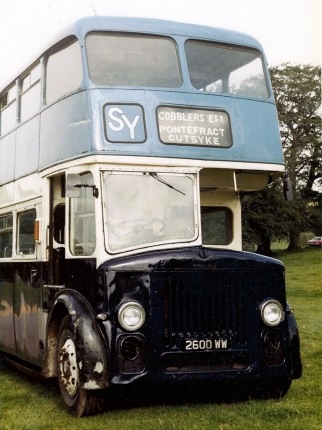
South Yorkshire – Leyland Titan PD3/1 – 2600 WW – 83

South Yorkshire - Leyland Titan PD3/1 - 2600 WW - 83                   Copyright Brian Lunn

South Yorkshire Motors 
1960
Leyland Titan PD3/1
Roe L31/32RD

In the late 1970’s I purchased South Yorkshire Motors Leyland PD3 2600WW at the urging of a number of people who offered help in preserving this vehicle. The bus was running in service the day before I took it to where I was keeping it. I was a little naive as I thought straight out of service it must be roadworthy. How wrong could I be? I took it for a MOT a month later and it failed on 5 items rendering the vehicle dangerous to use on the road. I managed to get the bus painted in the original South Yorkshire Motors colours, by this time a year had passed and so had all the willing helpers who soon disappeared when they found out there was some hard graft to do. I think all they were interested in was going to Rally’s! However I progressed with as much as I could manage by myself, until one day in the early 1980’s I was offered a sum of cash for it and away it went. It caused a bit of a topic when it was seen in a local scrap yard, I think it caused more interest as to why I had sold it than any of the time I had been struggling to get jobs done on it. I am sure I am not they only one who has been led into the false sense of believing all the promises of help and then they do not materialise.

Photograph and Copy contributed by Brian Lunn


09/05/12 – 07:53

Such a sad story, Brian, but so common. A friend bought a Grey Cars Reliance/Willowbrook Viscount about thirty years ago and spent much in time and money. In the end, it was too much for one man on his own and again the scrap yard won. Makes you admire even more the chaps who manage to succeed and share their charges with us at rallies and on running days.

David Oldfield


09/05/12 – 07:56

I think we all know about "fair weather friends", Brian!
At least you tried. Thanks for posting what looks to be in interesting bus with an unusual livery, albeit one I’m not that keen on.

Chris Hebbron


09/05/12 – 09:22

They looked good round Pontefract! There’s a clip of one of their Albions on the "sounds" page here, if I recall.

Joe


09/05/12 – 09:22

What a very sad, but by no means rare, saga Brian. Its also a great pity because 83 and its twin 82 were, as far as I’m aware, the very last 30 foot long lowbridge double deckers ever produced, and were like all SYRT vehicles above average in internal appointments. I shall have to relay your story to my one time workmate Mrs. Gladys Banks of Pontefract – I still see her and many more of my former colleagues quite regularly.
Gladys passed her PSV test on 83 and was a driver, a very competent one indeed, for many years before becoming an inspector. Right up to her retirement she would abandon her ticket checking at a second’s notice and would operate any busy journey, OPO of course in latter days, without a whimper and with impressive and enviable punctuality !!

Chris Youhill


09/05/12 – 19:22

After the 1325-49 Regent Vs the 901 and 464 PD3s were among my STD favourites – the PD3s being highbridge but otherwise like the South Yorkshire motors (only a year older).

David Oldfield


09/05/12 – 19:24

Thank you Brian for being open about a saga that some would keep quiet. Unfortunately when your resources are stretched to the limit and you decide you need to let go of a bus, you will never find a suitable buyer. Let’s face it, realistically how many people would want buy a South Yorkshire PD3?
Unrealistically, I would, as I thought they were superb machines. In hindsight I would have picked one of the Bond-bodied PD2s which were also very appealing as well as being unusual.
They were by no means the last lowbridge PD3s as several entered service in South Wales later, notably the last lowbridge bus of all, Bedwas and Machen UDC 6 (PAX 466F) in 1967. Caerphilly UDC also bought a few, before turning to the PD2 for their later purchases.

David Beilby


09/05/12 – 19:26

Thanks to every one for their comments I thought that I had not tried enough, to make it work, but it makes me feel a little better to know I was not the only one who was left to graft alone. I think that you are right Chris regarding the last 30 foot low bridge to be built. As for Gladys she used to conduct on my local service coming home from school, in the mid 50’s as Gladys Illingworth as she was then, I still see Fred Bellamy and Nelly Edwards around town. One thing that was good about SYM all the garage staff with licenced drivers and conductors, I know the duplicate on the Doncaster-Leeds route which ran from Thorp Audlin to Whitwood Tech, often had a member of the garage conducting.

Brian Lunn


10/05/12 – 11:13

Thanks David B for that correction – I think I was confused regarding the last thirty foot lowbridge bodies, and SYRT 82/3 were simply the last such built by Roe.
Brian, I’m fascinated to learn that you are local to Pontefract, where I spent almost fifteen very happy years with SYRT/Caldaire/British Bus/Arriva before retiring on my 65th birthday.
I was once involved in the preservation of a Portsmouth Corporation Bedford OWB in the open air in a muddy yard off the A61 at Robin Hood. While we toiled away under awful conditions, hoping to reach a point where we could attend rallies "part preserved", there were plenty of "visiting dignitaries" with much verbal advice and that’s all !! I nearly blew my top one day as the season approached and a notorious pair rolled up one Saturday and, casting a deprecatory glance at CTP 200, remarked "Huh, only three weeks to the Rally – THEY’RE going to have to get out and get under then !!" "THEY’RE" consisted of me and my pal up to hilt in grease etc and we were not amused. The state visit lasted only a few minutes before the smartly clad "enthusiasts" departed.

Chris Youhill


11/05/12 – 08:05

Alas, the Albion clip has gone- "taken down" from you-tube. It was shot in Dewsbury, with a trip up the "cutting". Could it be tracked down?
I think I now see your livery problem, Chris H: the pic here makes the lower "Oxford Blue" look black. Chris Y & I register it in the proper colour!

Joe


12/05/12 – 07:42

Although I do have colour-blindness problems, Joe, even my wife, not so afflicted, thought it was black at first sight. We both noticed the subtle difference between the black mudguard and lower bodywork. A look at the SY Albion on Flikr, showed the true colours. And you would both be familiar with the livery, whereas I’d never seen it in the flesh, so to speak! Freshly painted, it looks handsome!

Chris Hebbron


12/05/12 – 17:23

In answer to the colour, I did use the official SYM paint which was mixed by Masons of Wakefield, I agree that in the photograph it does look dark, but I think that there is some evening shadows on the vehicle as the photograph was taken quite late in the day. I have looked at No 81 and the lower blue seem much lighter than I remember and looking at my collection of SYM photos a number tend to differ in different light conditions.

Brian Lunn


13/05/12 – 08:37

Brian, I’ve had lunch in Pontefract today with Gladys, who was quite amazed and pleased to hear that she was so well remembered.

Chris Youhill


04/09/16 – 13:33

Yesterday I returned to Leeds after 25 years away. (only in Staffordshire but not my beloved Yorkshire!) I went to look at the old…now new…Leeds bus station and was so disappointed not to see a South Yorkshire pulling in on the 1/2 hour, complete with a ‘duplicate’ following shortly behind, much to the relief of the long queue waiting at the barrier. When did South Yorkshire stop running? My uncle Harold ‘Tom’ Westwood spent many of his retirement years reupholstering or mending the upholstery of these buses, well into his 80s

Sandy


05/09/16 – 06:26

Brian – I’m sorry to have to tell you that dear Gladys passed away in June after a short illness. Independent to the last she was 83 – – a coincidence considering that she passed her PSV test on 83 !! Freddy Bellamy is still around but I don’t know about Nellie – she’s certainly been ill in recent times.
Sandy – SYRT sold out to Caldaire Holdings on July 8th 1994, but West Riding did run it as a separate unit until it finally closed in March 2003, by which time it had been owned by Caldaire, British Bus, Cowie Group, and Arriva. The vehicles and staff were transferred to Castleford Belle Isle and the depot sold for housing and was demolished.

Chris Youhill


25/06/21 – 06:23

I have just got a South Yorkshire timetable from the late 70’s I think. Company name is South Yorkshire Road Transport Ltd., not South Yorkshire Motors. Did they have a company name change, and if so, when.

Ken Holway


26/06/21 – 06:07

Re my post above, I am told the name change to South Yorkshire Rod Transport was 1973

Ken Holway


Quick links to the  -  Comments Page  -  Contact Page  -  Home Page


All rights to the design and layout of this website are reserved     

Old Bus Photos from Saturday 25th April 2009 to Wednesday 3rd January 2024