Old Bus Photos

J Wood & Sons – Crossley DD42 – EVD 406 – 20
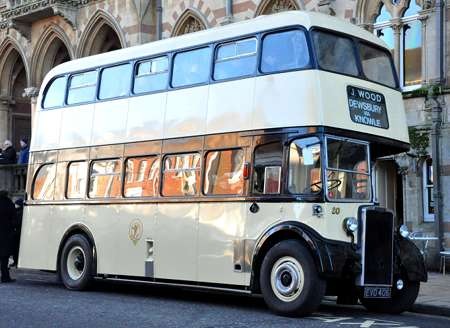
J Wood & Sons - Crossley DD42 - EVD 406 - 20
Copyright Pete Davies

J Wood & Sons (Mirfield) 
1949
Crossley DD42/7
Roe H56R

Here is a view of J Wood & Sons of Mirfield preserved Crossley DD42/7 bought in 1953 from Baxter’s of Airdrie where it was delivered new in 1949. She sports a Roe H56R body from either 1954 or 55 there seems to be conflicting information on the actual date, can anyone confirm? New 1949 rebodied 1954/5, five or six years does not seem all that long, is there a story behind that, and does anyone know what the original body was? She is seen outside Winchester Guildhall on 1 January 2010, visiting the King Alfred Running Day.

Photograph and Copy contributed by Pete Davies


21/12/12 – 07:33

Just for information. The 2013 King Alfred Running Day will, as usual, be on New Year’s Day. Sometimes, the event is moved, but no disruption for this coming one. The restored Leyland Olympic should be back in service and one of the members is hoping to have his 1930’s Paris Renault on duty.

Pete Davies


21/12/12 – 07:34

I have some information about the Crossley of Joseph Wood. The original body was built by Scottish Aviation. Two elderly coaches were traded in to Comberhill Motors of Wakefield to purchase the bus. This was the first double decker for the firm. Mr Colin Wood Josephs son related the facts to me. He was serving in the army in Korea when he received an angry letter from his father to tell him that on its first test it had failed due to bodywork defects. Colin suggested that they had the bus rebodied. At the time Yorkshire Woollen were having their wartime Guy Arabs rebodied so it was arranged that the Crossley would have similar bodywork. In 1954 the company scrapped the body and the head driver Mr Sam Land drove the chassis from Mirfield to Crossgates. On its return it entered service and was used on the joint service from Mirfield to Dewsbury alongside J J Longstaff and Yorkshire Woollen. For the next twenty years or so it went through two engines on the service its only escape was when Huddersfield Town Football club was playing at home when it was used on the excursion to the ground. Eventually the day came when the Crossley was due for withdrawal and so the ex Leyland Atlantean demonstrator KTD 551C was purchased. The Crossley was parked up against the garage and eventually became a tyre store. Colin had always wanted to preserve the bus and for the next few years he worked on the bus and had it reupholstered. On completion the bus looked splendid and one Sunday he invited friends and former employees and the bus made two commemorative journeys. Then the bus was kept at Keighley Bus Museum and was rallied frequently. Eventually it was decided to sell the bus and it was sold to Quanstock Motor Services and I read in Preserved Bus that the vehicle was for sale. If I win the Euro Millions Lottery it will be the first thing on my shopping list!!!

Philip Carlton


21/12/12 – 07:35

This bus is currently up for sale at Quantock Motor Services and they have it being re-bodied in 1952

Andrew


21/12/12 – 07:36

Beautiful – and beautifully preserved – bus. As a Roe man, my gut instinct says 1954 rather 1955. The upper deck would have been slightly different, but the archaic five bay lay-out muddies the waters. [I don’t have documentary proof, just instinct.]

David Oldfield


21/12/12 – 07:38

Pete, you have raised an interesting question about the original body on this bus, and, surprisingly, the comprehensive ‘Crossley’ book by Eyre, Heaps and Townsin does not give a specific answer as far as I can find. The authors do make reference to five single deck SD42s bought by Joseph Wood, and then go on to state that Wood "acquired a second hand DD42 which it had fitted with a new Roe body", but neither the previous owner nor the original body are identified. The Scottish agent for Crossley was the Scottish Commercial Motor Co. of Glasgow, and it made the bodies itself on a number of its sales, but some were fitted with other makes of bodywork, including lowbridge examples by Roe. However, the following site www.sct61.org.uk/ confirms that the original body was, indeed, a Scottish Commercial product that was superseded by the current excellent Roe body in 1954. Clearly, some, at least, of the Scottish Commercial bodies must have been decidedly suspect to have given a life of only five years. Most of the wartime utilities managed rather better than that.

Roger Cox


21/12/12 – 10:33

Thank you, gents, for your comments on the origin of this bodywork. A fascinating read!

Pete Davies


21/12/12 – 12:48

I would say that the earliest the body dates from is 1954. I am basing this on deliveries to Leeds in that period all of which had deeper windows on both decks. By the arrival of the 1954 AEC Regents these were much shallower as seen here. However the bus is still an absolute gem and ideally should be repatriated north.

Chris Hough


21/12/12 – 12:49

I’m in complete agreement with David O, that it would have looked so much better with the Roe four and a quarter bay body, but I’m not sure if that style was available in 7ft 6in width, which this vehicle was. Around the same time, J W Moseley of Barugh Green, Barnsley had an ex-Sheffield utility Daimler rebodied with exactly the same style of Roe body.

Chris Barker


21/12/12 – 13:47
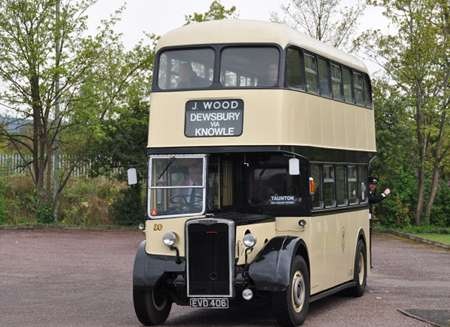
EVD 406_lr_2

You may want to add this picture to the current discussion as it shows the vehicle from the front, and no reflections in the windows. Taken by myself at Taunton Railway Station on 1/5/10 during Quantock Motors running day,

Ken Jones


21/12/12 – 13:48

Chris The 4 and a quarter bay body was widely available so to speak from Roe Leeds standardised on 4 bays the half bay was (blanked off) from 1948 onwards and I think this was the Roe standard. One thing Roe often did for smaller operators was to tack their buses onto the end of a larger order which meant they got the same style of body but with a bit off the cost.

Chris Hough


23/12/12 – 07:19

It has to be said – a great looking vehicle even if it’s an ACV Crossley. Given the location of its owner, given the weather and, prior to smokeless zones, the output from household fires and woollen mill chimneys, the choice of colour scheme must have kept the bus washers busy.

Phil Blinkhorn


31/12/12 – 07:02

The Roe body dates from 1955 being completed on the 6th April that year.

Andrew Beever


01/01/13 – 11:33

The first photograph on this link shows EVD 406 prior to the 1955 Roe body being fitted www.jsh1949.co.uk/

Andrew Beever


18/02/13 – 08:29

Stephen Morris was driving this vehicle in service today [17/2/13] at the Hanley event. He expects to be driving it in service at the Kirkby Stephens event over Easter

Ken Jones


02/03/13 – 07:05

Was delighted to see this bus at Hanley but the engine was running flat no guts at all. Not sure what has happened to it recently but the last time I rode on it in 1999 at Keighley it had plenty of power then. Unfortunately the Hanley performance caused the running out in conversation all the usual Crossley negative traits. Shame after the effort myself with DBN 978 and the Birmingham 2489 Group have made to dispel this image!

Ralph Oakes-Garnett


14/03/13 – 16:06

A quick question if I may, when did Woods actually finish??

Peter Abel


15/03/13 – 08:33

The question of when Woods finished is around 1985 I forget the actual date. What happened is that they sold out to Abbeyways of Halifax who consolidated the Mirfield operation as Go Big Ltd and operations continued sometimes using buses from the Hyndburn hire fleet both double and single deckers but a bizarre purchase was a Leyland Leopard with an Alexander body that had once been a Leyland demonstrator abroad that operated on a Q plate. I remember that it had the destination for the Mirfield to Dewsbury service painted on the destination glass. Later on selling this bus the new owner had it rebodied by Plaxton.Eventually Abbeyways wound up the Mirfield operations and the depot at Lee Green Mirfield was sold to Ron Lyles who moved there from Batley. Later he moved his operations back to Batley and the depot was pulled down and Old Peoples flats were built on the site.

Philip Carlton


15/03/13 – 11:11

Thanks very much for info Philip. I will see if there’s anything in ‘Buses’ for that year.

Peter Abel
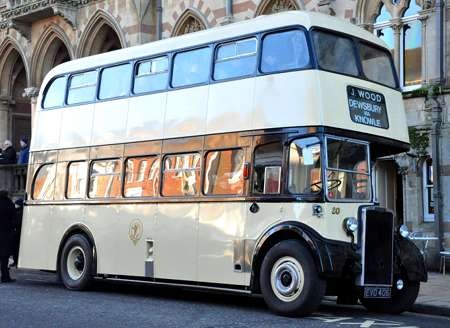

EVD 406_lr Vehicle reminder shot for this posting


18/06/15 – 10:48

I believe this bus is now in the care of the Dewsbury Bus Museum. It turned up as a ‘special guest’ at their March open day, still in pristine condition. Unfortunately it was parked in a corner and my photo did not do it justice.

Tim Jackson


Quick links to the  -  Comments Page  -  Contact Page  -  Home Page
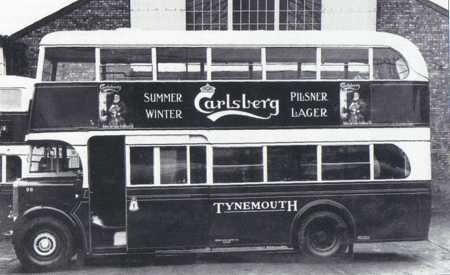


Tynemouth and District – Leyland Titan TD5 – FT 4498 – 98

Tynemouth and District – Leyland Titan TD5 – FT 4498 – 98
Copyright Unknown

Tynemouth and District
1938
Leyland Titan TD5
Weymann H??F

More from my youth. 98 was one of eight 1938 forward entrance Weymann bodied Leyland TD5’s delivered to the Northern General subsidiary of Tynemouth and District. They were FT 4496/4503 numbers 96/103. About 1950 in common with many pre war vehicles they were given a new lease of life and re bodied.

Tynemouth and District – Leyland Titan TD5 – FT 4500
Copyright Unknown

100 is seen here with its second body, and you could be forgiven for asking how ECW bodies came to be in a BET fleet? Well in fact they’re Northern Coachbuilders H30/26R. I’m aware of one example of the type that’s still around, NVK 341 is a beautifully restored 1950 Newcastle Corporation AEC Regent 111 and has been featured on this site. I don’t know if the doors on the Weymann’s were powered or manual and almost certainly they would not have been equipped with heaters, but they seem to have been well ahead of their time. Does anyone know of any survivors?

Photograph and Copy contributed by Ronnie Hoye


18/12/12 – 16:35

I am not familiar with Northern General, but the forward entrance Weymann body looks very much like the ones mounted on AEC Regent chassis for Midland General in the late 30s. I can remember travelling on one of these about 1953 on the C5 Alfreton to Nottingham route. I don’t think the sliding doors were powered. Trent also had some similar ones, but these were rebodied with conventional rear entrance Willowbrook bodies (lowbridge from memory) around 1950 I think. It’s remarkable to that immediately before WW2 Nottingham had three different operators with forward entrance double deckers – since Barton also had quite a lot of Leylands, some of them rebodies of older vehicles bought second hand. These were not Weymanns however.

Stephen Ford


19/12/12 – 07:32

I’m very pleased you mentioned those Stephen because one thing I noticed was that although the Trent and Midland General Regents both dated from 1937 and both were bodied by Weymann, they were somewhat different. The MGO bodies were basically same as the Tynemouth example above. The Trent examples had an odd, longer length second window bay which resulted in a much shorter rearmost side window on both decks. Also, the bulkhead under the canopy had a single window on the MGO vehicles whereas on the Trent ones, there were twin windows. So, it would seem that Weymann had more than one front entrance double deck design in production at the same time. It makes you wonder why certain operators preferred such subtle differences.

Chris Barker


19/12/12 – 07:32

Some very nice views there, Ronnie!

Pete Davies


19/12/12 – 08:45

Weymann were renown for their metal framed bodywork and classic designs. Pre-war, there were three separate products – Flexible, Coachbuilt and Metal. Coachbuilt approximated to the composite framework used by Charles H Roe up to 1968. The featured body is a composite body. Mansfield District/Midland General had both composite and metal bodies in the pre-war period.

David Oldfield


19/12/12 – 13:39

The first photograph – that’s an original, right ?

After classic coaches, the second love of my life is the amber nectar….I’m not a historian, but genuinely amazed that Carlsberg existed all those years ago and, even more amazement, they hoped to sell it in the North East in competition with Newcastle Brown !!

Stuart C


20/12/12 – 08:05

Stuart, according to the encyclopaedia website, that brewing company was founded in 1847, and now controls a fair number of brands. The list might make you weep into your drink but includes Tetley and Scottish & Newcastle . . .

Pete Davies


20/12/12 – 09:39

An equally surprising ‘brewing’ fact is that lager, per se, was so popular in an era when most folk seemed to drink ale, porter or mild and bitter. I’ve seen pre- 1914 adverts on trams for Tuborg lager and one, dated 1908, for ‘Alsopp’s British Lager’ To me, lager seemed to take off in the late 1950’s.

Chris Hebbron


20/12/12 – 09:43

Presumably you stuck your Carlsberg on a boat and just headed west. Do you notice that they were anxious to explain that Lager (or Pilsner if you not sure what to call the stuff although it was always a long way from Pilsn) was not just a cold summer drink…? They succeeded!

Joe


21/12/12 – 07:27

Unusual to see a bus that looked so good in both incarnations, though for sheer character I go for the front-entrance original. The nice lining-out and dignified fleet name are a fine finishing touch. Did Northern Coachbuilders build these ECW lookalikes on licence, or to order, or simply as the sincerest form of flattery? Their own designs always look very good to my eye as well.

Ian Thompson


21/12/12 – 10:40

Ian. An ECW man was enticed to NCB just before NCB’s major shareholder died and they were landed with crippling death duties which did for the company. This body is closer to ECW’s original than the Newcastle Regent III – which has slightly odd (uneven) bay spacing.

David Oldfield


22/12/12 – 14:55

I can remember seeing these front entrance double deckers on the Blyth – North Shields Ferry service 7 as a small boy around 1949-50 an once did a return trip on one accompanied by my aunt. These were very different to the usual AEC Regents allocated to this route.

Gerald Walker


07/11/14 – 06:19

I have enjoyed looking at the old photos I worked at Percy Main from 1963 until 1969 but I can not remember Ronnie Hoye but you sure know your buses.

Ray 33323


07/11/14 – 15:39

Ray, do you have a Brother called Brian, who was a fitter at Percy Main?

Ronnie Hoye


14/10/20 – 07:04

Regarding Ronnie Hoye’s observation on the re-bodying of Leyland TD5’s, I think he is wrong on this occasion. According to lthlibrary.org.uk they were given ECW bodies well before NCB came out with the new 8ft wide design in 1949/50. Below is the text pasted from the LTHL site.

"1938 Leyland TD5 No. 96 (FT4496) with original Weymann 55-seat forward entrance bodywork. It was re-bodied in 1948 by ECW with a 53-seat rear entrance body. (LTHL collection)."

Ray Jackson


16/10/20 – 06:10

Ray, I believe you are correct, In the Venture book about Northern Coachbuilders there is a photograph of one of these rebodies, that of FT 4500, complete with ECW makers label in the destination box. The photo is included to afford a comparison between the two products, ECW and NCB but it provides conclusive proof that the Tynemouth AECs were indeed bodied by ECW.

Chris Barker


17/10/20 – 06:19

That these vehicles were rebodied by ECW is confirmed by PSV Circle publications, which give the body numbers as ECW Series 2 nos. 2973-2980 (not in order) with 2973-6 being new in 10/48 and 2977-80 new in 12/48. However, there seems to be a doubt as to their seating. Fleet History PA6, which covers Tynemouth and District gives the seating split as L27/26R, although that is clearly wrong, as these were highbridge bodies, while Body List B1205 states that they were H30/26R, which was standard for this style of body. As the body list is a much more recent publication, it is, perhaps, more likely to be correct.

John Gibson


17/10/20 – 06:23

Before giving the wrong answer, Ronnie invited the question as to what ECW bodies were doing in a BET fleet, and that still stands. The answer is that the rebodying was completed by the end of 1948, and therefore would have been ordered long before ECW sales were restricted. Other non-Tilling operators for whom ECW were building at the time were Middlesbrough Corporation, Birch Bros and the Red & White group.

Peter Williamson


19/10/20 – 06:10

51-37

Following up Peter Williamson’s comment about ECW bodies supplied to non-Tilling companies, a quick trawl of "Bus lists on the Web" also shows substantial numbers of rebodying work on TD chassis for East Kent and Ribble, while Southdown took a batch of 25 PS1s with C31F bodywork, and Western Welsh took 62 PS1 with B35R bodywork, all in 1947. 4 similar buses went to Isle of Man Road Services in 1948. Southdown 1249 is seen at Bognor Depot in 1972 after conversion to a mobile left luggage office; IOMRS 57 in withdrawn condition at Ramsey in 1968.

Alan Murray-Rust


20/10/20 – 06:28

Not forgetting the batch of ECW bodied Leyland PD1s delivered to North Western in 1948 which were, in effect, lowbridge versions of the Tynemouth re-bodies, seen above.

Chris Barker


27/10/20 – 05:46

North Western was a rather different case, having been a Tilling company until 1942 and having not yet been forced to change its vehicle policy. Like some other Tilling companies, at that stage it only bought PD1s because Bristol could not build enough Ks to meet the demand.

Peter Williamson


29/10/20 – 06:15

A further comment on these rebodies, I recall them being used on service 5 between Newcastle and Whitley Bay (Cemetery). Tynemouth seemed to allocate batches of vehicles to specific routes. Another batch of vehicles were AEC Regents with NCB bodies of the earlier pre-ECW look-a-like design, these being used on service 7 between North Shields Ferry and Blyth, while my earliest memory of service 4 (Whitley Bay to Gateshead) was of the Pickering bodied Guys. That route, which was later renumbered 1 seemed to be allocated batches of new vehicles displacing earlier vehicles to other routes. I have a vague recollection that the1955 batch of Weymann Orion bodied Guys were initially used on the 1/4 before ending up on the 5 replacing the TD5s, not as far as I was concerned a change for the better.

John Gibson


01/11/20 – 06:03

John, the Weymann Orion bodied GUY Arabs (two batches of them) were sturdy and robust, typical of GUY’s.
That said, the bodies were rubbish, and soon gained the nickname of Rattletraps.

Ronnie Hoye


Quick links to the  -  Comments Page  -  Contact Page  -  Home Page


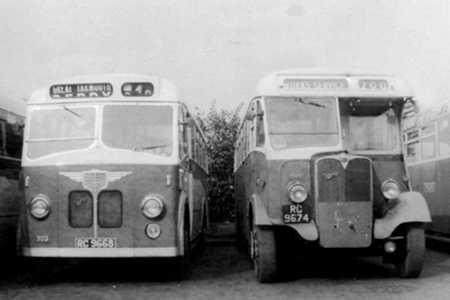
Trent – AEC Regal I – RC 9668/74 – 303/768

Trent - AEC Regal I - RC 9668/74 - 303/768
Copyright Bob Gell

Trent Motor Traction 303                            Trent Motor Traction 768
1947                                                            1947
AEC Regal I                                                  AEC Regal I
Willowbrook FDP39F                                  Willowbrook B35F

A company not yet represented on this site is Trent Motor Traction, so this photo is to rectify that omission. In the early postwar years, Trent took delivery of a large number of AEC Regals with Willowbrook bus bodies. In 1958, some 20 of the Regals were modernised by Willowbrook, who fitted a full front, extended the chassis and lengthened the body to 30 feet, increasing the capacity from 35 to 39.
The rebuilt vehicles were treated as dual purpose, which meant they saw use on local services (the only time I rode on one was on the Derby ‘town service’ 27 from Scarborough Rise to the bus station), and also express services, often to the East Coast on summer Saturdays.
I’m not sure how much of a success they were, as they were withdrawn in 1962/3, only 2/3 years after the last of the unrebuilt examples.
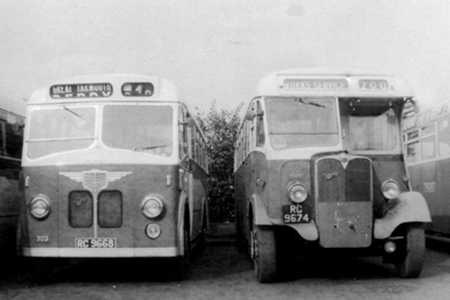
My photograph shows rebuilt 303 (RC 9668) and unrebuilt 768 (RC 9674), both from the 1947 batch, at Derby Bus Station in 1960.

Photograph and Copy contributed by Bob Gell


16/12/12 – 11:03

Extending the chassis and fitting a new body? Sounds rather like the Tilling fleets with the Bristol L to LL conversion. Who’s idea was it?

Pete Davies


16/12/12 – 12:20

Were not some of these Regals lengthened by Trent themselves but remained half cabs?

Eric Bawden


16/12/12 – 14:47

I found this site by accident (What a fascinating place the internet can be) and have been delighted with the photographs and comments. I was with Trent from 1965 to 1967 prior to emigrating to Western Australia. I worked at the Hucknall depot in Nottinghamshire where we drove mainly Leyland PD2’s and 3’s plus Atlanteans and Daimler Fleetlines. I never gave a thought, sadly, to taking photographs but I have found a few examples of vehicles similar to those that I drove. If anyone has examples of Trent buses I would love to see them.

Malcolm Holmes


17/12/12 – 08:14

When I was a nipper we took holidays at Skegness and we stayed at digs near the coach park! I seem to recall one of the full front vehicle was used as some kind of booking office. Have I got this right? My father who had the same initials RC often commented the number plate would be just right for his own car this being before the craze was the general norm.

Philip Carlton


18/12/12 – 08:00

To answer a couple of points, the rebuilt vehicles didn’t have new bodies. As Bob rightly states, the original bodies simply had the rearmost bay extended to achieve 30ft length and provide four extra seats. In halfcab form they had been used on long distance express services but attracted complaints from passengers because the original bus seats were very low backed. The rebuilt vehicles were given dual purpose seats although these were still rather spartan. The rebuilds gave between four and five years service, the last being sixteen years old when withdrawn, I suppose that was quite creditable for Trent who usually worked to a twelve year maximum fleet life.
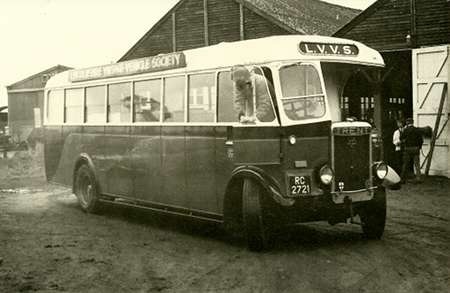
I’ve never known if the AEC radiator was retained behind the full fronts but the rebuilt vehicles had a reputation for getting extremely hot in the cabs and were known as ‘sweat boxes’ None of them were extended and retained half cabs. Quite a few rebuilds saw further service after leaving Trent. The mobile booking office at Skegness was a much earlier vehicle, a pre-war SOS.

Chris Barker


19/12/12 – 07:22

Chris – Thanks for the additional information.
The pre war SOS mobile booking office (RC 2721) was saved for preservation, and is currently being restored by LVVS at Lincoln.

Bob Gell


13/06/13 – 11:34

As a fitter and a manager working at Trent for 30 years 1962 to 1992 I can confirm that the lengthened AEC Regals were indeed "sweatboxes" working on the engine in the cab in thick overalls on a hot day had to be believed! they did not retain the original AEC radiator but a flat metal affair, where they came from I am not sure. The conversions were all carried out at Willowbrook but for me they did not look right. As a matter of interest my boss at Trent for 25 years Malcolm Hitchen MBE is currently writing about his 50 years with Trent engineering hopefully to be published to coincide with Trent 100 years in October 2013

Alan Hiley


RC 9668-74_lr Vehicle reminder shot for this posting


24/08/13 – 15:27

RC 2721

There is mention on this Trent page of a mobile booking office used at Skegness. This was RC 2721 a 1935 BMMO DON converted to the booking office in May 1953, acquired by the Lincolnshire Vintage Vehicle Society in April 1965. Still with them in 2013 and being put back to its original condition.

Alan Hiley


03/09/13 – 06:00

RC 2721_2

Alan Hiley in his contribution of 24/08/2013 makes mention of Trent Motor Traction Co., 1935 BMMO DON – RC 2721 being with the Lincolnshire Vintage Vehicle Society, in preservation.
I thought you would like to see it in their ownership.

Stephen Howarth


Quick links to the  -  Comments Page  -  Contact Page  -  Home Page


All rights to the design and layout of this website are reserved     

Old Bus Photos from Saturday 25th April 2009 to Wednesday 3rd January 2024