Copyright Chris Hough
Leeds City Transport
1958
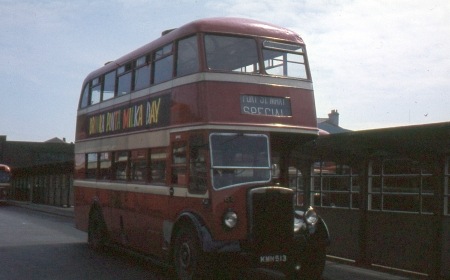
Leyland Titan PD3/5
Roe H38/32R
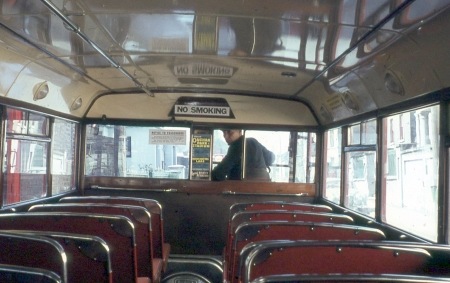
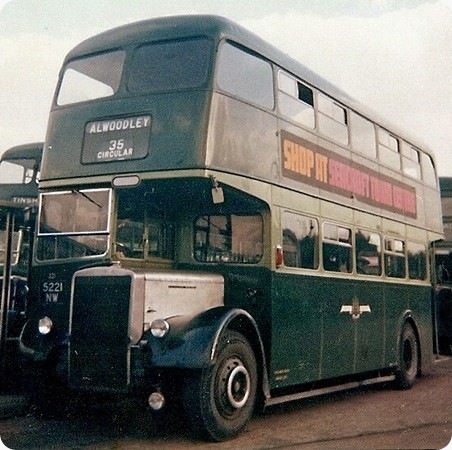
This handsome Leyland Titan PD3/5 was the Roe exhibit at the 1958 Earls Court Show It was one of 70 bought by Leeds for tramway replacement The batch were used extensively on the Moortown – Middleton group of former tram routes and most of them lasted into the mid seventies. They were Leeds last exposed radiator Leylands and also the last Roe bodied Titans to enter service.
Photograph and Copy contributed by Chris Hough
18/05/12 – 07:46
I remember visiting the 1958 Earls Court Show and seeing the Leeds PD3 and admiring the Roe body a maker hardly known in the south of England where I lived at the time although by the time of the show, being in the RAF stationed near Lincoln I had become familiar with the City transport fleet of Leylands and Guys with handsome Roe bodies. One particular Roe bodied PD3 I took a few trips on belonged to Hudsons of Horncastle the journey between Lincoln and it’s home town was through very rural country the bus gave a very comfortable ride and was resplendent in a cream and blue livery.
There was a tradition of having a Roe bodied Leeds City Transport bus at Earls Court when the show was held there every two years the last one I can remember was a 33ft panoramic windowed Fleetline, in 1966 I think, another very attractive bus, the Earls Court shows were enjoyable as you could get in or onto nearly all of the exhibits.
Diesel Dave
18/05/12 – 07:47
A true classic but in my opinion spoiled by the Leeds practice of having the unpainted engine cover. Anybody know why they did that? But on the other hand wasn’t it such features together with the illuminated ‘Limited’ sign, another Leeds feature, that made our hobby so interesting. We can all doubtless name little features that made our cherished operators just that bit special.
Philip Halstead
18/05/12 – 07:48
As well as the lining out this bus carried initially, like most show exhibits, I recall it having one other distinctive feature from the show. The kick plates on the staircase all had the Roe "toffee" emblem embossed on them. A neat touch.
David Beilby
18/05/12 – 10:25
The unpainted bonnets were to stop possible scratches whilst under going routine maintenance etc which would have made them look untidy.
Roger Broughton
18/05/12 – 12:17
Surprisingly Leeds’s last AEC Regent Vs with enclosed radiators dating from 1966 also carried polished bonnets although enclosed radiator Daimlers and Leylands did not.
Chris Hough
18/05/12 – 12:19
What can I do but agree about the beauty of the classic Roe design – although I feel the Leeds (non-standard) window pans didn’t do it justice.
David Oldfield
18/05/12 – 15:59
I see the Titan codes list of PD2 models omits the "Blackpool Special" PD2/5. I may be wrong, but I’ve always understood that the PD2/4 was supplied either only to Bolton or only to Bolton and Bury.
Pete Davies
18/05/12 – 16:57
I always thought the idea of the unpainted hatch was to help show/clean off all the oil and fluids that spray off the engine…
Joe
18/05/12 – 16:57
Chris, I think the PD3a’s and Daimlers bonnets would be painted because they were fibreglass the Regent V still being metal.
Eric Bawden
19/05/12 – 07:41
Were the pan-glazed windows unique to Leeds? All other Roe bodies of this style that I’ve seen had rubber gasket mounted windows
Chris Barker
19/05/12 – 07:42
A large batch of PD2s sold to CIE were unofficially known as Boltons by Irish enthusiasts as they were identical to the Bolton examples. One Bolton example survives as a tow car in the Manchester Museum of Transport.
Chris Hough
21/05/12 – 08:04
The Leyland PD2/4 was the air braked version of the more common PD2/3 which had vacuum brakes. It was only supplied to Bolton (with Leyland bodies) and Bury (with Weymann bodies). The Blackpool only PD2/5 also had air brakes and I think must have had some special features in the chassis design to suit Blackpool’s full-fronted centre-entrance Burlingham bodies to render it having a separate designation to the PD2/4.
Philip Halstead
21/05/12 – 17:16
Buses Annual 1964 – the very first one – gives Leyland Home Market Passenger Models 1945-date: It lists the difference between PD2/4 with a drop rear frame extension (for the platform) and PD2/5 without a drop rear frame extension (for Blackpool’s centre entrance). Otherwise the two chassis are identical.
Ian Wild
02/07/12 – 18:03
I always felt these tram replacements vehicles were the proverbial ship spoiled for the sake of an ha’porth of tar, the single skinned roof domes, the abolition of the staircase window and the lack of bodywork over the mud guard all of which are so prominent on earlier vehicles.
Ken Greaves
03/07/12 – 07:24
These PD3s like their stablemates the CVG6LX/30s were originally 71 seaters but they were blacked by the unions and so a single seat was placed at the top of the stairs.
The single skin domes etc were an attempt at weight reduction as all previous deliveries of buses since 1954 had been lightweight apart from the 15 Roe bodied PD2s delivered in 1955.
Chris Hough
21/01/13 – 17:25
I was a guard at the time of introduction of the 30ft PD3s and an active member of the TGW at TRG. I always understood that the removal of the seat on the top deck was due to some local by-law re buses with 70 plus seats not being allowed to carry standing passengers. As half of one of the 150 regular crews on Dewsbury Rd. – Moortown – Middleton (for which these buses were originally bought as tram replacements) I certainly never blacked it and I don’t know of anyone who did. We welcomed them with open arms because of the sheer space available on them and the lovely steady ride they gave to both crew & passengers.
Bill Midgley
22/01/13 – 06:48
A rather fascinating piece of "trivial pursuit" here, considering the matter of the 70/71 seats which these vehicles created. While the seating was soon reduced from 71 to 70, the widely held belief that the batch comprised 70 vehicles (a logical number to order one would have thought), but it was actually 71, numbers 221 – 291.
Chris Youhill
 Vehicle reminder shot for this posting
25/07/16 – 09:51
I wonder if there’s a lot of rose-coloured spectacles being worn in these reminiscences. Like most Roe-bodied buses of the period, the PD3s were good looking and nicely proportioned on the outside, but in the incessant quest for economy, light weight etc, they were almost unbelievably austere on the inside, with thin seating squabs, bare bulbs etc. However, one massive step forward was the provision of a heater for the passengers, which sometimes did take the edge off a cold day. Smooth and steady ride? I must have been riding a different batch of buses than other people; even on March 28 1959 when most went into service, they shook and banged about on the poor road surfaces. This march day was the last day of the Moortown/Roundhay trams-and those to Middleton and Belle Isle. Even they, run-down as they were, and traversing their hopelessly neglected tracks, gave a better ride than the new buses. Not that there was much else wrong with them. They took a hammering in their 15-plus years of Leeds service and many went on to have a few extra years in second-hand service elsewhere.
David A. Young
25/07/16 – 15:13
I’m sorry David that you experienced such rough rides on the PD3s and, to be fair, I’m sure that they were quite OK on decent roads. They were certainly most comfortable indeed to drive with very well designed and proportioned cabs. Their big drawback however was their very poor brakes, especially on very busy routes with heavy loads. Brake fade was prevalent and was something you had to be very aware of and "ready for." My old friend Keith Peacock (sadly deceased at a very young age) had his own patent way of dealing with this when he was on the former tram "figure of eight" ex tram routes that you mention. On approaching every stop he would change down into third perfectly and imperceptibly but with maximum revs – this of course took much of the work off the brakes, and due to his skill caused no discomfort to anybody. I have to say that ALL those column type heaters with a little dash mounted outlet on the top deck were pretty useless regardless of the make of chassis. You couldn’t beat the good old Clayton Dewandre circular ones with large fans, or even better those KL box types beneath the seats – the latter being fitted retrospectively to nearly all Samuel Ledgard buses. In fact on a couple of the former Exeter Daimler CVD6s (JFJ 52/55) at Otley depot I’ve known passengers plead for them to be turned off even in Winter as their powerful fans distributed the enormous heat from the hot running Daimler engines.
Chris Youhill
28/07/16 – 08:48
Chris, I was never privileged enough to drive any bus, but in the summer of 1964 I was one of 25 students taken on for the summer by LCT and did a lot of conducting on the PD3s. They may well have been comfortable for the driver, but for the conductor, they were anything but, stuck out as he normally was on the unstable, thumping back platform. As a passenger the extra width was appreciated, but they were overall not nearly as comfortable to ride in or conduct (just like their slightly younger Daimler equivalents), nor as nicely trimmed as the earlier 8′ wide Regent 3s. But they were a rugged vehicle, externally good looking and capable of some very hard work.
David A. Young
29/07/16 – 08:50
Chris will know that cars of the same era had drum brakes and you did not rely on them alone: the gearbox and downward changes provided more braking. Even preselector gearboxes were used in this way and stopping for passengers was quite a long exercise: that’s why you didn’t need any flashing stopping lights- passengers just knew by the noise from the brakes. On the other hand you were not sent flying down the aisle by this more sedate process and could dare stand up before the stop: you had to stand up because the stop button was the conductor’s. If you were late doing this you would be carried beyond your stop: best, to make a noisy descent of the stairs. These posts recall a bit of transport or social history. In 1950 neglected trams could be replaced by well upholstered flexible diesel buses running at a very few bob a gallon: then came Suez and costs spiralled: so then the drive for economy- cut down weight with spartan fittings- back to trams- and sometimes underpowered buses. Now buses are gridlocked and away from Boris land we have austerity: Leeds has spent fortunes proposing guided buses, trams, trolleybuses… all rejected: but in 1950 it had many miles of segregated tram tracks. Hey ho.
Joe
29/07/16 – 16:26
Times change Chris, when I passed my PSV test in 1967, as you quite rightly point out, brakes were not as efficient as they are now and brake fade was common. In order to try and avoid this, even in a car you were taught to use the gearbox as a brake. This is a practice that seems to have fallen out of favour, and would be impossible in most buses as most of them seem to be automatics.
Ronnie Hoye
30/07/16 – 08:39
This subject of using the engine as a brake has turned up on OBP before. A one time regular contributor maintained that the engine was for propulsion only and never for braking, overlooking the fact that every time you take your foot off the accelerator the engine then acts as a brake. Anyone who has driven a PD3 in service will know that the use of the gearbox to assist the stopping power with engine braking was absolutely essential. The model had truly appalling brakes.
Roger Cox
31/07/16 – 07:08
Quite right Ronnie and Roger, the PD3s had wickedly inadequate brakes when faced with heavy work, and the PD2s weren’t much better. Very strangely though the PD1s, which I would have thought had similar braking components to the PD2s at least, never seemed to give the slightest cause for alarm, ever. Its quite remarkable that such a leading and highly respected manufacturer could fall down on such a vital issue. The Leopards, the 36 foot ones certainly, were similarly alarming. I have heard fitters commenting that the problem lay in inadequate brake lining area and ventilation. I believe also that some kind of "anti squeal" bands could be fitted to the drums to minimise or eliminate that infuriating noise which many Leylands were prone to emit. A more disturbing aspect is that, when cold and after servicing, satisfactory test meter readings were achieved, of little use when you were trying to stop a heavily laden vehicle at busy times.
Chris Youhill
01/08/16 – 07:01
In a way, the balme equally lies with management of bus undertakings purchasing vehicles lacking in such an essential requirement. Driving Halifax’s huge PD3/4’s must have been a nightmare! Hill-climbing seemed variable, too. I recall reading of Southdown’s Queen Mary’s having variable ability to climb hills, too, with conductors wondering at times if they would be called upon by the driver to help push from behind!
Chris Hebbron
01/08/16 – 07:03
I know that at some point in the past on a different thread the subject of PD3 brakes has been discussed before before, but since it’s cropped up again…..
I drove both PD2’s and PD3’s at Halifax on an almost daily basis throughout the 1970’s, frequently on heavily loaded journeys on arduous, steeply graded routes. It was certainly second nature to me to change down into appropriately lower gears when descending hills – it was the way I was taught and for the period was considered to be correct driving practice in all types of vehicle. As far as Halifax’s ‘own’ Titans were concerned, though they may not have been as good as a Regent V or CVG6LX/30 brakewise, I don’t ever recall having any particularly anxious moments in the braking department – and believe me at times they were driven quite vigorously!
However, when in the early days of the WYPTE we received twelve pneumocyclic PD3A/2’s from Huddersfield, they were different altogether. Their brakes squealed excruciatingly and even when using lower gears to descend even the slightest gradient they would fade away to nothing and cause some heart stopping experiences. Despite their ‘easy’ gearchanges – compared with the often heavy, clumsy and cantankerous manual boxes of the Halifax examples – our drivers hated them at first and rang them in at every opportunity. Over time the Halifax engineers seemed to cure the squealing, but their fading tendencies persisted as long as we had them. So in my experience the braking inadequacies were confined to those with Pneumocyclic gearboxes.
In more recent times I have partaken of a few rides on the free bus service connected with the former Heart of the Pennines Rally – usually up and down the long, steep gradient to the Sportsman at Ploughcroft. I have been amazed, and on certain occasions deeply worried, at the driving methods and standards employed by some of the drivers in some of the older vehicles. Maybe it’s just because so many hail from more level regions that the concept of engine braking on descents is an alien one, or also that so many of the younger drivers have been brought up on modern automatics with huge brakes and powerful integral retarders. So many of them however would race down the long, steep descent into the heavily built up area of Boothtown with a full load of oblivious enthusiasts, in top gear braking all the way. In many cases the brake linings would be seriously overheating and emitting that dreadful stink, but their drivers never seemed to appreciate the danger.
Recently I was talking with a well known local enthusiast who operates a ‘heritage’ fleet of older buses for hire. He is perhaps not surprisingly finding it increasingly difficult to recruit suitable drivers with experience (and the appropriate licence) of older buses. One of the problems that the ‘newer lads’ – or those who are primarily car drivers – all seem to have is that they want to change up through the gears and into top at the earliest opportunity and end up flogging the poor vehicle to death to the point where one can almost hear each individual cylinder firing. Climbing hills they then leave it so late to change down that by the time they do so they almost come to a stop and then replicate the same flogging all over again. Similarly then staying in top down hills and relying on the brakes. We both came to the conclusion that in either case the drivers were simply frightened of the noise of the engine working at higher revs in the confined space of the half cab, beleiving that they were going to do it damage, whereas in fact the engines (if properly maintained) were designed to work at those revs, and that they were doing far more damage to the rest of the vehicle by driving that manner.
Back to Leylands though. My general feeling about them – PD2’s, PD3’s and earlier Leopards – was that they were capable, but rather unremarkable and characterless models that tended to be heavy, awkward, rather clumsy and usually hard work. In deference to Chris Youhill, I did drive both a PD1 and PS1 in preservation on a number of occasions years ago and found them to be a far more pleasant and characterful vehicle, despite being very much an AEC man myself.
John Stringer
01/08/16 – 16:17
John, I’m able to be brief here and say simply that I agree with every word you’ve written above, and I most certainly share your alarms about inexperienced drivers unwittingly taking huge safety risks. Once some years ago I was at a well known bus rally in Surrey and had a long ride on the top deck of a full laden preserved London AEC RT. The driver drove like a lunatic and, from the constant pronounced "list to port" it was patently obvious that it had either a broken nearside rear spring, or two very soft tyres. On one right hand bend we were, perversely, only spared from going in the ditch by the speed which carried it through to a more level stretch of road – its the truth to say that during that few yards some of us were thrown off the seats into the gangway. On alighting we mentioned in no uncertain terms to the conductor our serous concerns – he appeared quite unaffected. This is not to detract from the good and much appreciated work done by competent volunteers in helping us to enjoy delightful vintage vehicles, but its an extremely worrying situation.
I’m so glad that you found the "Swiss watch" appeal of the PD1s/PS1s as appealing as I did over many happy years "for real."
Chris Youhill
02/08/16 – 06:51
John, it’s over half a century since I drove a PD2 on the Queensbury route, which was something I chose to do quite frequently on my Traffic Clerk extra curricular overtime stints. As both we and, indeed, our webmaster Peter know, the route is fundamentally on a significant falling gradient all the way down from Queensbury through Boothtown into Halifax. Even at this distance in time, the notion of a bus driver descending the steepest parts in top gear and relying wholly upon the brakes chills my blood. It is a reflection upon an utter ignorance of and lack of sympathy for the mechanical workings of the vehicle. Sadly this attitude of isolation from mechanical understanding and roadway conditions is blatantly apparent as normal driving behaviour nowadays. To many, a car has two pedals, one for go and another for stop, and one or the other has always to be firmly pressed down throughout a journey. Following behind such people is akin to witnessing a display of Christmas lights – the brake lights flash on and off constantly. Unfortunately also, this style of driving is all too apparent in the present day bus industry. I cannot recall when I last experienced a smooth stop as a passenger in a bus. The art of feathering the brakes to bring the vehicle to a jerk free halt seems to have vanished for ever.
Roger Cox
02/08/16 – 17:19
Glasgow Vintage Vehicle Trust run as many as four pneumocylcic Titans in contemporary traffic on a number of days during the year and I can not recall any problems with the brakes, although SGD65 did have a re-line a couple of years ago and does occasionally squeal. I was grateful of its air brakes whilst conducting this year’s West End Festival as a driver of a modern private car cut across in front of my driver and an emergency stop was required.
Granted that Glasgow has no hills to match the Pennines and as all GCT Titans were pneumocyclic they all had air brakes. I would also point out that all our drivers get a half-day assessment on L446 before they are passed to drive of our Glasgow City owned buses.
A question for any fellow contributor to OBP who might know, were the later Titans (PD3/11 etc) with dual-circuit brakes any better?
Stephen Allcroft